Hear from Our Customers
You stop waking up congested. Your energy bills drop because your system isn’t fighting through layers of debris. The air smells fresh instead of stale or musty.
That’s what happens after a real air duct cleaning—not the $49 bait-and-switch kind, but the kind where someone actually removes what’s built up in there. Most homes in McCarty haven’t had their ducts cleaned in years, if ever. That means every time your furnace or AC runs, it’s pulling dust, pet dander, pollen, and sometimes mold through your vents and into the rooms where you sleep and eat.
The EPA says indoor air can be two to five times more polluted than outdoor air. Your ducts are a big part of that. If someone in your house has asthma, allergies, or just can’t shake a cough, this is worth looking into. It’s not a cure-all, but it’s one of the few things you can do that actually removes the problem instead of masking it.
We’re an IICRC-certified restoration company that handles air duct cleaning, mold remediation, water damage, and fire cleanup across McCarty and the surrounding Indiana area. We’ve been doing this since 2016, which means we’ve seen what happens when ducts go uncleaned for a decade—and we know how to fix it.
We’re available 24/7 with a live person on the phone, not a voicemail. If it’s an emergency—say, you just discovered mold in your HVAC system—we’re on-site in 60 to 90 minutes. For scheduled cleanings, we show up on time, do the work, and don’t try to upsell you on services you don’t need.
Indiana’s older housing stock and humid summers make duct contamination more common here than in drier climates. We account for that in how we inspect and clean your system.
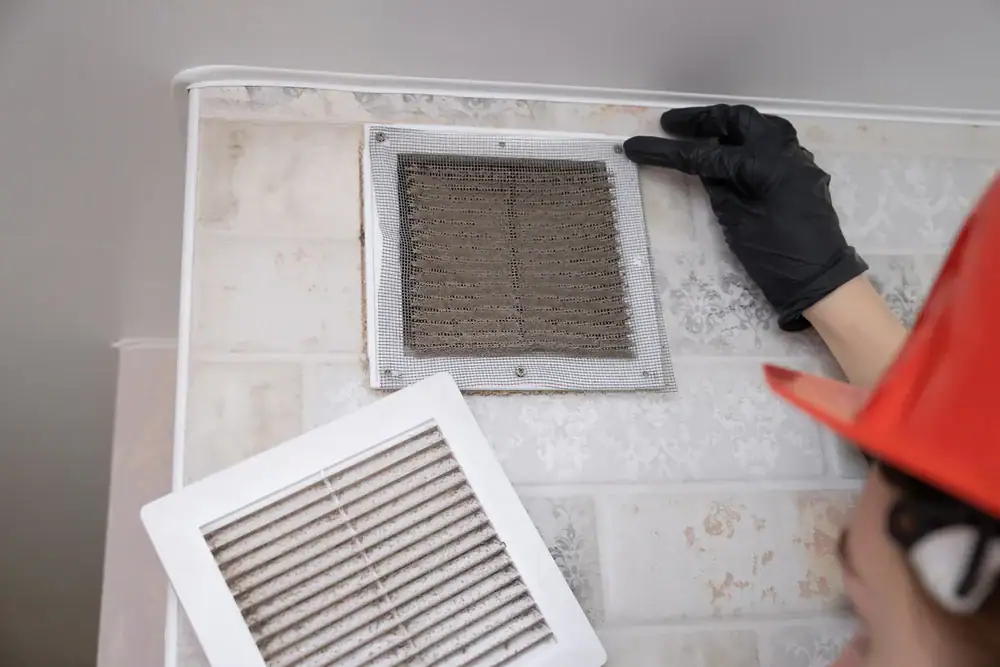
First, we inspect your entire HVAC system with a camera so you can see what’s inside your ducts before we start. No guessing. If there’s mold, debris, or just a normal amount of dust, you’ll know.
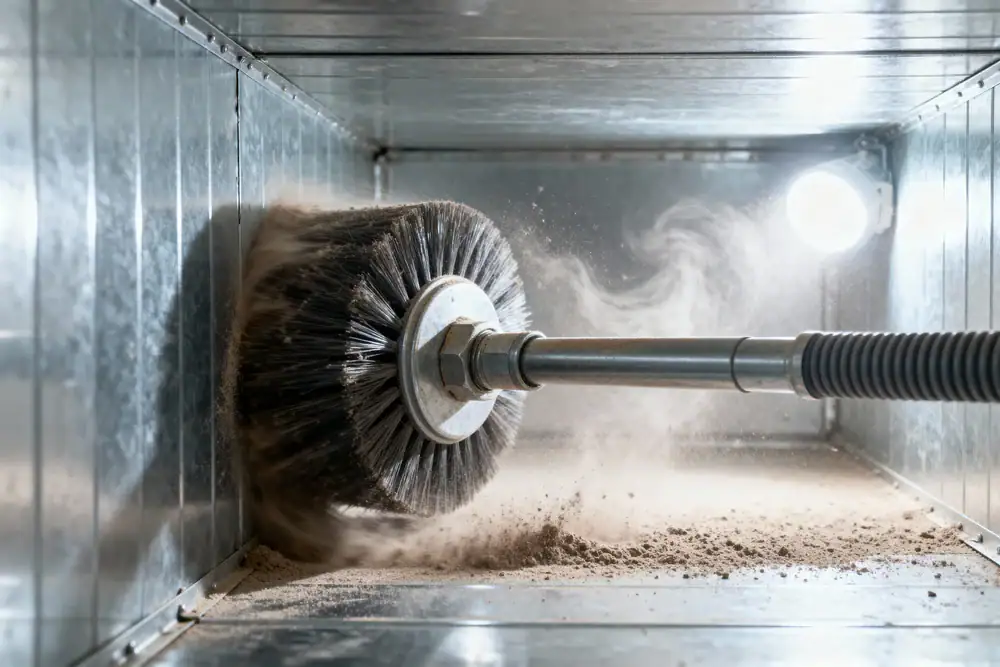
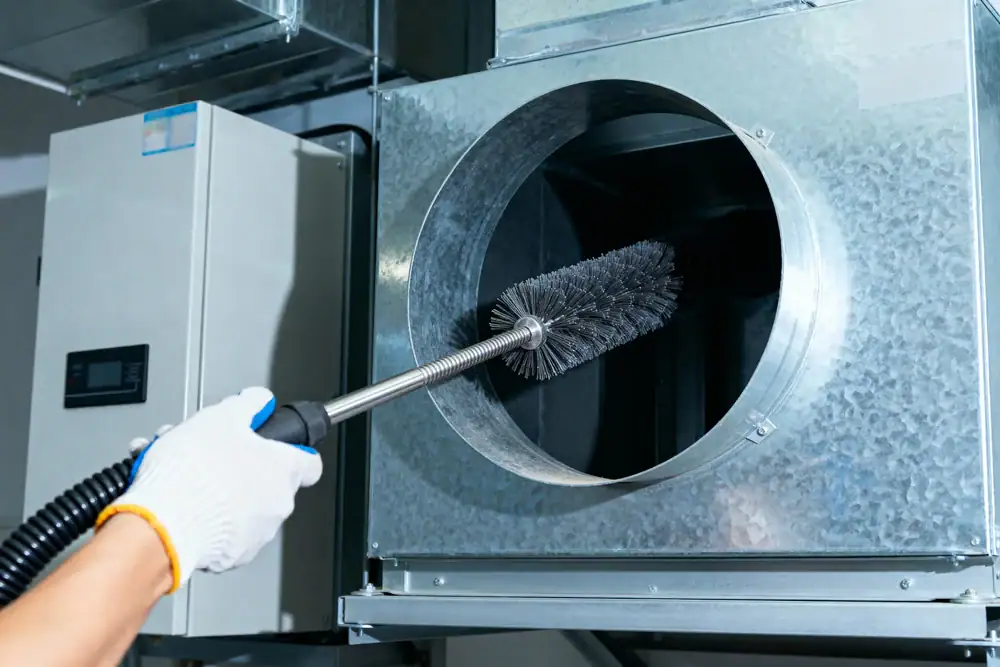
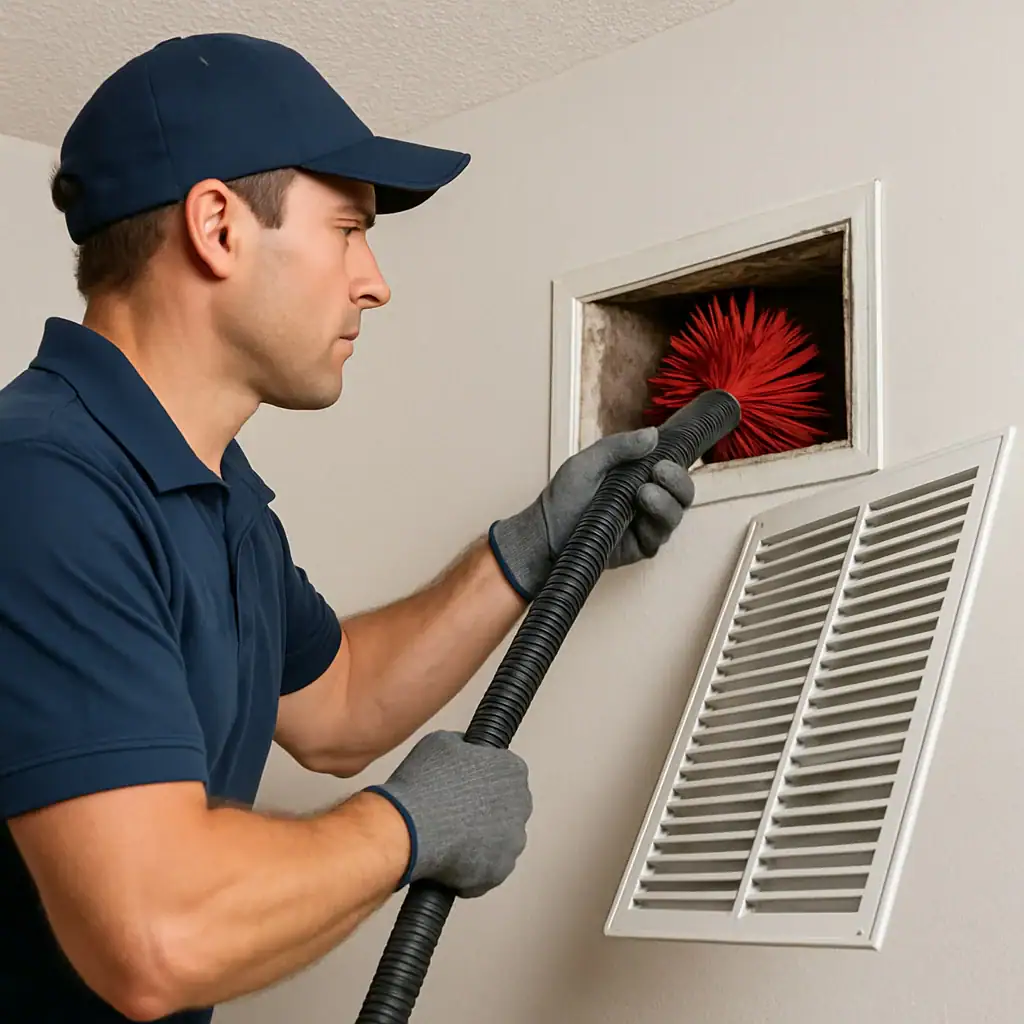
Next, we seal off your vents and use HEPA-filtered negative air machines to create containment. That keeps dust and particles from spreading into your home while we work. Then we use rotating brushes and high-powered vacuums to scrub and extract everything from the duct walls—not just blow it around.
We also clean your furnace blower, evaporator coil, and return vents, because those collect just as much buildup as the ducts themselves. If we find mold, we treat it with an EPA-registered antimicrobial and document everything for your records. The whole process usually takes three to five hours depending on the size of your home.
After we’re done, we walk you through what we found, what we removed, and what your system looks like now. You’ll get photos, and if this is an insurance claim, we provide all the documentation your adjuster needs.
Ready to get started?
You’re not just getting your vents vacuumed. A complete air duct cleaning service covers your supply and return ducts, registers, grilles, diffusers, heat exchangers, cooling coils, drip pans, fan motor, and air handling unit housing.
We also inspect for leaks, disconnected ducts, and moisture problems that could lead to mold growth down the road. If your dryer vent hasn’t been cleaned in a while, we handle that too—it’s one of the top fire hazards in homes, and it only takes 30 minutes to clear.
In McCarty, where spring pollen counts spike and summer humidity sits above 70%, your ducts are working overtime. Add in older homes with original ductwork, and you’ve got a recipe for buildup. We see it constantly: ducts caked with years of dust, pet hair wound around blower fans, and black mold growing on coil fins. It’s fixable, but it takes the right equipment and someone who knows what they’re doing.
If this is part of a larger restoration job—say, after water damage or a fire—we coordinate the duct cleaning with the rest of the work so you’re not dealing with multiple contractors.
NADCA recommends every three to five years for most homes. That window shortens if you have pets, someone with allergies or asthma, recent renovations, or if you’ve had water damage or mold.
Indiana’s humidity and older housing stock mean ducts here tend to accumulate moisture and debris faster than in drier climates. If you’re seeing dust on surfaces a day after cleaning, or if your vents smell musty when the system kicks on, it’s time.
You don’t need to clean them every year unless there’s an active problem. But waiting ten years means you’re circulating a decade’s worth of buildup every time you turn on your heat or AC.
Professional air duct cleaning typically runs $300 to $500 for an average-sized home, depending on the number of vents, the level of contamination, and whether mold treatment is needed. If you see an ad for $49 or $99, that’s a bait price—they’ll upsell you once they’re inside, and the final bill often lands between $1,500 and $5,200.
We use Xactimate pricing, which is the same software insurance companies use. That means our estimates are transparent and aligned with industry standards. If this is an insurance claim—say, after a fire or water loss—we work directly with your adjuster and handle the documentation.
For non-insurance jobs, we offer discounts for military members, seniors, first responders, and teachers. No hidden fees, no surprise charges.
It can, especially if your ducts are clogged. The U.S. Department of Energy estimates that HVAC systems with clean ducts can run 20% to 30% more efficiently because air flows freely instead of fighting through layers of dust and debris.
That doesn’t mean you’ll see a 30% drop in your bill—it depends on how dirty your ducts were to start with and how well your system is maintained overall. But if your furnace or AC is running longer cycles to reach temperature, or if your filter gets filthy within a week, dirty ducts are likely part of the problem.
Cleaner ducts also mean less strain on your blower motor, which can extend the life of your HVAC system and reduce the frequency of breakdowns. It’s not a magic fix, but it’s one of the few maintenance tasks that directly impacts airflow and efficiency.
Yes, if your ducts are full of allergens. Dust mites, pollen, pet dander, and mold spores collect in ductwork and get blown into your living space every time your system runs. The American Lung Association notes that Americans spend 90% of their time indoors, and the EPA says indoor air is often two to five times more polluted than outdoor air.
Cleaning your ducts removes the source of those airborne particles. That doesn’t cure allergies or asthma, but it can reduce triggers. We see this most often in homes with pets or after a water leak that introduced mold into the HVAC system.
If someone in your house is constantly congested, sneezing, or dealing with headaches that improve when they leave the house, contaminated ducts are worth investigating. It’s not the only factor, but it’s one you can actually control.
Look for visible dust around your vents, a musty smell when your HVAC runs, or dust resettling on furniture within a day of cleaning. If your energy bills have crept up without explanation, or if someone in your home is experiencing worsening respiratory symptoms, those are also signs.
You can also pull off a vent cover and shine a flashlight inside. If you see a coating of dust, debris, or—worse—dark spots that could be mold, it’s time to call someone. We use a camera to inspect the full length of your ducts so you can see exactly what’s in there before deciding whether to move forward.
In McCarty, where humidity and older homes are common, we routinely find ducts that haven’t been touched in 15 or 20 years. By that point, the buildup is significant, and the air quality impact is noticeable. You don’t have to wait until it’s that bad.
Air duct cleaning addresses your HVAC system—the ducts that circulate heated and cooled air throughout your home. Dryer vent cleaning clears the exhaust duct that vents your dryer to the outside. Both get clogged, but dryer vents are a fire hazard.
Lint builds up in dryer vents every time you run a load, and it’s highly flammable. The U.S. Fire Administration reports thousands of dryer fires each year, most caused by failure to clean the vent. If your dryer is taking longer to dry clothes, or if the outside vent flap isn’t opening when the dryer runs, the vent is probably blocked.
We clean both, and we often do them together since the equipment and process are similar. Dryer vent cleaning takes about 30 minutes and costs a fraction of what you’d pay if a fire starts. It’s one of those things that’s easy to ignore until it’s not.
Other Services we provide in Mccarty