Hear from Our Customers
Your HVAC system pulls air through those ducts every time it runs. If they’re clogged with dust, pet dander, mold spores, or construction debris, that’s what you’re breathing. And your system has to work harder to push air through the blockage.
Clean ducts mean your furnace and AC don’t strain. That cuts your energy use by 15% or more, according to the U.S. Department of Energy. You’ll see it on your next bill.
You’ll also notice fewer allergy flare-ups, less dust on your furniture, and air that doesn’t smell stale or musty. If someone in your home has asthma or respiratory issues, this matters even more. Indiana has over 650,000 people living with asthma, and indoor air quality plays a real role in managing symptoms.
Your HVAC system will last longer, too. A well-maintained system can run 30-50% longer than one that’s neglected. That’s years of life you’re adding back to a major investment in your home.
We’ve been serving Central Indiana since 2016. You’re not getting a franchise or a national call center. You’re getting a local, IICRC-certified team that answers the phone live and shows up in 60 to 90 minutes when you need help.
Hadley sits in an area where older homes, humidity swings, and seasonal temperature shifts put extra strain on HVAC systems. That means ducts collect more than just dust. You’re dealing with moisture, mold risk, and debris that builds up faster than in newer construction.
We’ve cleaned ducts in homes just like yours. We know what to look for, how to protect the rest of your house during the job, and how to document everything so you have a clear record of what was done.
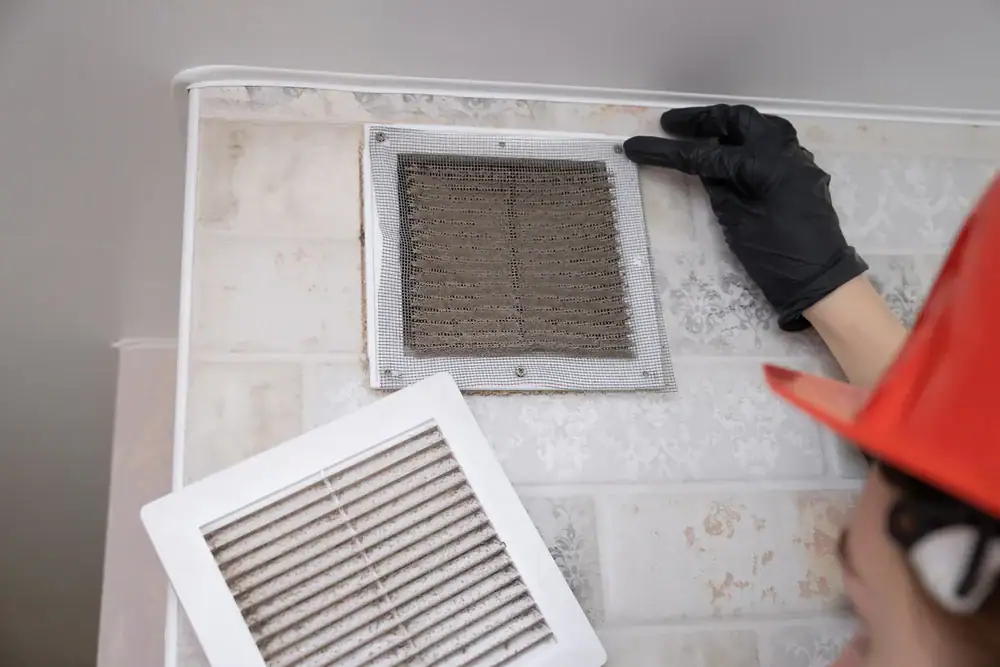
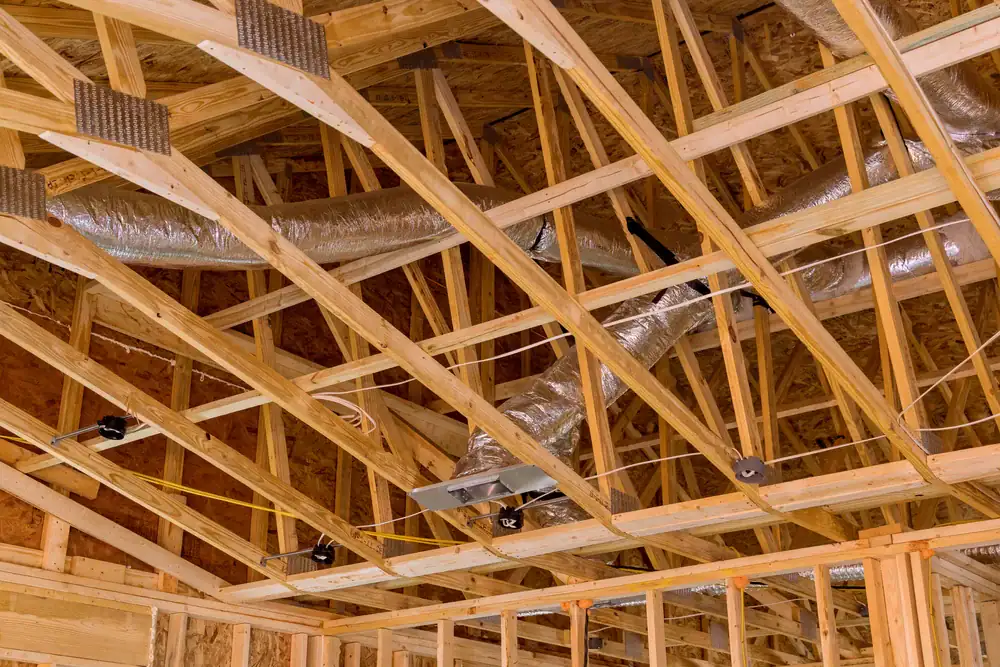
First, we inspect your entire HVAC system. That includes the ductwork, registers, grilles, coils, and blower motor. We’re looking for buildup, blockages, mold, and anything else that shouldn’t be there.
Then we set up containment. We use HEPA filtration and seal off the work area so dust and debris don’t spread to other parts of your home. Our team wears shoe covers and treats your space with respect.
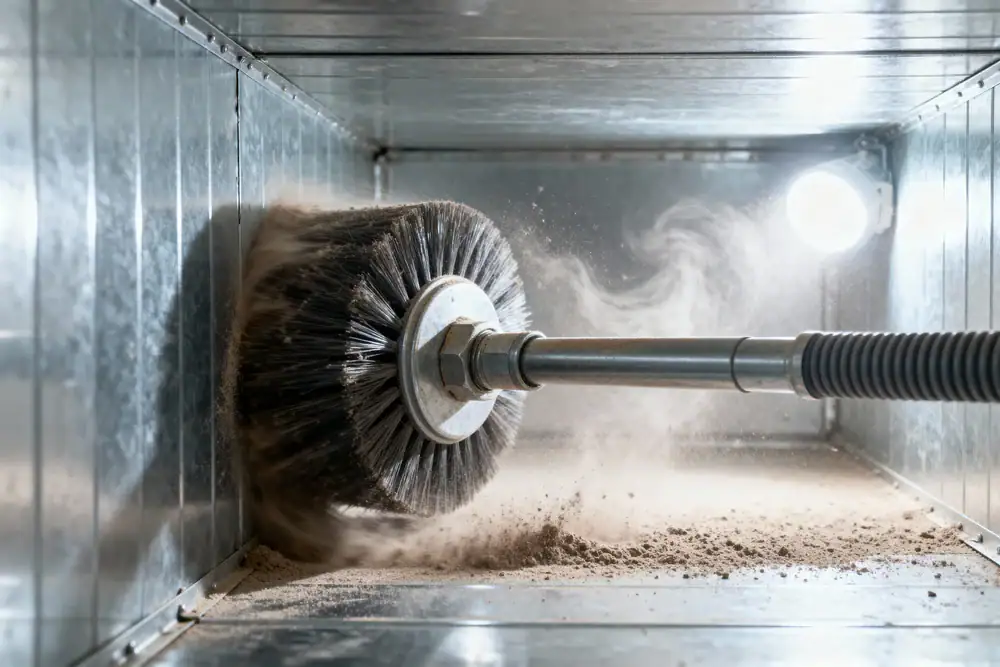
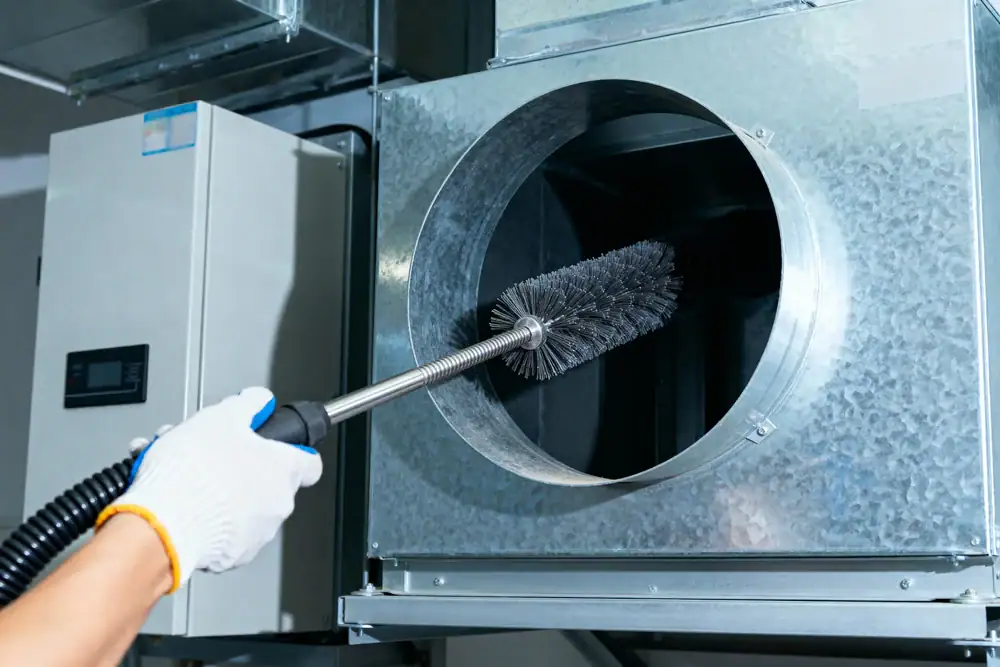
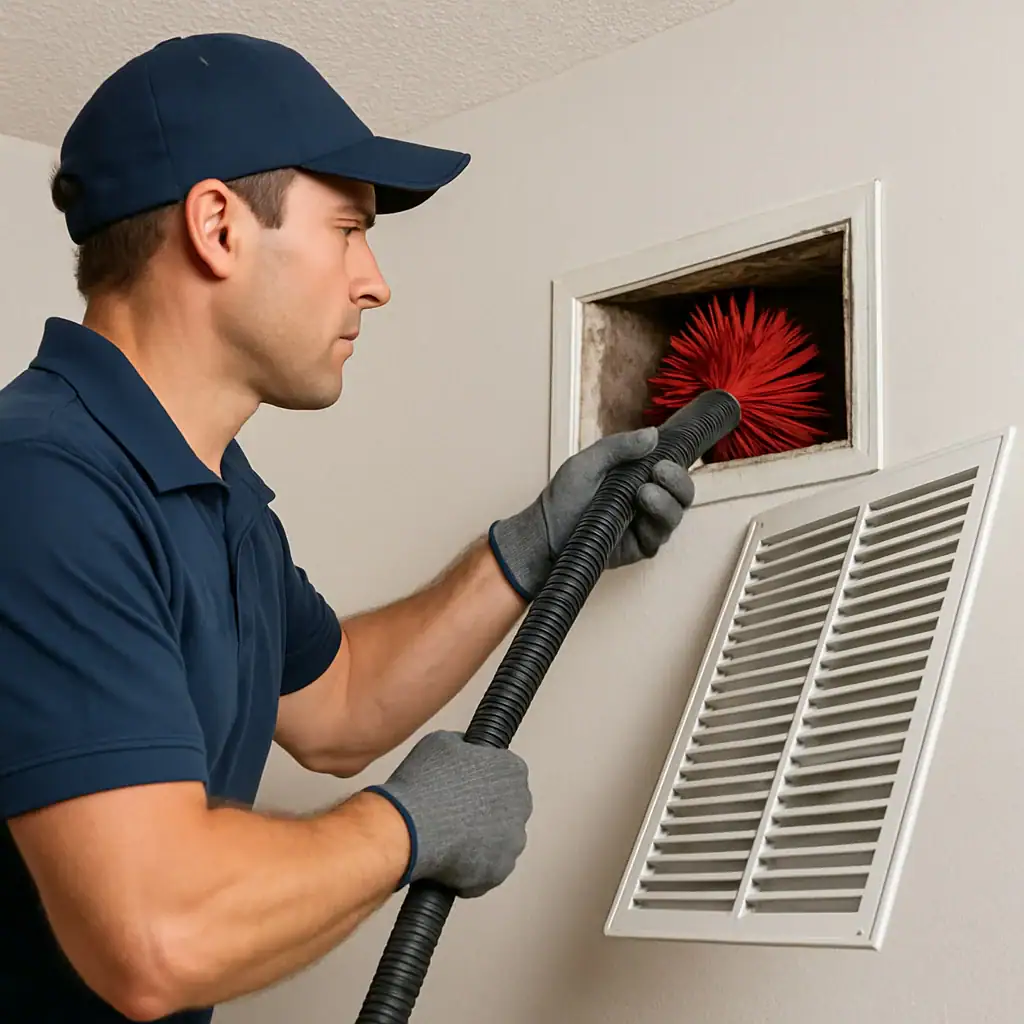
We use specialized tools to dislodge debris from the duct walls and a high-powered vacuum system to extract it. This isn’t a shop vac. It’s commercial-grade equipment designed to pull contaminants out without pushing them deeper into your system.
After the ducts are clean, we clean the registers, grilles, and accessible HVAC components. If you’ve had a fire or smoke event, we can also address odor and soot residue in the ductwork. If your dryer vent needs attention, we handle that too—because lint buildup is a leading cause of dryer fires.
Before we leave, we walk you through what we found and what we did. You’ll get photo documentation and a follow-up within 14 days to make sure everything is still running the way it should.
Ready to get started?
You’re getting a full-system cleaning. That means every register, return vent, supply duct, and accessible component gets attention. We don’t skip the hard-to-reach spots or rush through the job to get to the next one.
Dryer vent cleaning is part of what we offer, and it’s something you shouldn’t ignore. More than a third of residential dryer fires start with lint buildup in the vent. If your dryer takes longer to dry clothes or the outside vent hood doesn’t open when the dryer runs, that’s a red flag.
In Hadley and the surrounding area, homes built before 1980 often have ductwork that’s never been cleaned. Decades of dust, insulation fibers, and even rodent debris can accumulate. If you’ve recently had construction work done, drywall dust and sawdust are likely sitting in your ducts right now.
If your home has dealt with water damage, high humidity, or a musty smell that won’t go away, mold in the ductwork could be part of the problem. We’re trained in microbial remediation and know how to address it safely.
You’ll also get transparent documentation. We use moisture mapping, photo records, and detailed reporting so you know exactly what was done. If this is an insurance-backed job, we handle the claims liaison and billing directly.
Most residential air duct cleaning jobs in Hadley run between $300 and $500, depending on the size of your home, the number of vents, and how much buildup is in the system. If you have a larger home, multiple HVAC units, or significant contamination like mold or post-construction debris, the cost may be higher.
You’re not just paying for cleaning. You’re paying for IICRC-certified technicians, commercial-grade HEPA filtration equipment, containment setup, and documentation that meets industry standards. If this is part of an insurance claim after water damage or a fire, we work directly with your carrier and handle the billing.
The return on investment is real. You’ll save 15% or more on energy bills, reduce HVAC repair costs by up to 25%, and extend the life of your system by years. That’s a few hundred dollars now versus thousands later in premature equipment replacement.
The National Air Duct Cleaners Association recommends cleaning your ducts every three to five years. But that’s a baseline. If you have pets, someone in your home has allergies or asthma, you’ve recently remodeled, or you’ve had water damage or mold issues, you should clean them sooner.
Hadley’s climate and housing stock play a role, too. Older homes with original ductwork that’s never been serviced can have decades of buildup. Homes near agricultural areas or unpaved roads tend to accumulate more dust. If you notice more dust on surfaces, musty odors, or uneven heating and cooling, those are signs your ducts need attention.
After a fire, flood, or major restoration project, duct cleaning isn’t optional. Smoke residue, soot, and water-damaged insulation can contaminate your entire HVAC system and spread harmful particles every time the system runs.
Yes, if your ducts are actually dirty. Homes with contaminated ductwork see a 60% reduction in airborne dust and allergens after professional cleaning, according to industry studies. That’s a measurable difference you’ll notice in how your home feels and how often you’re dusting.
Indianapolis ranks as the 11th most polluted city in the nation for year-round particle pollution. Your outdoor air quality is already working against you. If your indoor air is being cycled through ducts filled with dust, pollen, mold spores, and pet dander, you’re compounding the problem.
Clean ducts won’t solve every indoor air quality issue, but they remove a major source of contamination. If you’re still having problems after cleaning, we can help you identify other factors like humidity levels, ventilation, or mold growth in other areas of the home.
Absolutely. The U.S. Department of Energy estimates that even a small amount of debris in your ductwork can increase energy consumption by 15% or more. When your ducts are clogged, your HVAC system has to run longer and work harder to move air through your home.
Research shows that cleaning your ducts can reduce fan and blower energy use by 41% to 60%. Airflow improves by 10% to 46% after cleaning. That means your furnace or air conditioner cycles less often, uses less electricity or gas, and puts less wear on the components.
Over the lifetime of your HVAC system, clean ducts can deliver a return on investment of 200% to 300% when you factor in energy savings, fewer repairs, and extended equipment life. If your energy bills have been creeping up and you can’t figure out why, your ducts are a likely culprit.
It’s necessary. About 2,900 residential dryer fires happen every year in the U.S., causing injuries, deaths, and $35 million in property damage. More than a third of those fires are caused by lint buildup in the dryer vent. That’s preventable with regular cleaning.
If your dryer takes more than one cycle to dry a load, if clothes come out hotter than usual, or if the outside vent hood doesn’t open when the dryer runs, your vent is likely clogged. Lint is highly flammable, and when it builds up in the vent pipe, it restricts airflow and creates a fire hazard.
Dryer vent fires spike in the fall and winter, with January seeing the highest number. If you haven’t had your vent cleaned in the last year or two, now’s the time. It’s a quick job that protects your home and makes your dryer work the way it’s supposed to.
First, make sure they’re IICRC-certified. That means they’ve been trained in proper cleaning techniques, safety protocols, and contamination control. You want a company that uses HEPA filtration, sets up containment, and doesn’t just blow dust around your house.
Ask about their equipment. A real air duct cleaning job requires commercial-grade vacuum systems and specialized tools to dislodge debris from duct walls. If they show up with a shop vac and a leaf blower, walk away.
You also want documentation. A legitimate company will inspect your system first, take photos, explain what they found, and give you a clear scope of work before they start. After the job, you should get a report that shows what was done and proof that it was done right.
Finally, check their response time and availability. If you’re dealing with a post-fire or post-flood situation, you need someone who can get there fast and coordinate with your insurance company. We answer live 24/7 and arrive on-site in 60 to 90 minutes when it matters most.
Other Services we provide in Hadley