Hear from Our Customers
You stop wondering why the house feels stuffy even when the AC is running. The air smells neutral again—not like must, pet dander, or whatever’s been sitting in those vents since the last owner lived here.
Your HVAC system moves air the way it’s supposed to. That means fewer hot and cold spots, less strain on the blower, and energy bills that don’t spike every time the weather shifts. In Hazelwood’s older housing stock—where Victorian-era homes and modest bungalows weren’t built with modern central air in mind—that efficiency matters.
If someone in your house deals with asthma or allergies, you’ll notice it first. Fewer sneezing fits. Less nasal congestion that won’t quit. The constant low-grade irritation that comes from breathing recirculated dust and mold spores starts to fade. Indoor air pollution can be five times worse than outdoor air, and your ductwork is often the delivery system for all of it.
This isn’t about perfection. It’s about getting your home’s air quality back to a baseline where you’re not fighting your own HVAC system.
We’re IICRC-certified and based right here in central Indiana. We’ve spent years responding to water damage, mold remediation, fire cleanup, and air quality emergencies across Hazelwood and the Indianapolis metro—so we know what happens when ducts get neglected, especially in older homes where moisture, freeze-thaw cycles, and humidity create the perfect conditions for mold and buildup.
We’re not a national franchise with a rotating crew. You get the same trained technicians, the same truck-mounted equipment, and the same process every time. We show up in 60 to 90 minutes when it’s urgent, and we document everything with photos and reports so you’re never guessing what actually happened inside your ductwork.
You’ll talk to a real person when you call, not a voicemail tree. And if you’re working with insurance, we handle Xactimate pricing and claims liaison so you’re not translating between your adjuster and your contractor.
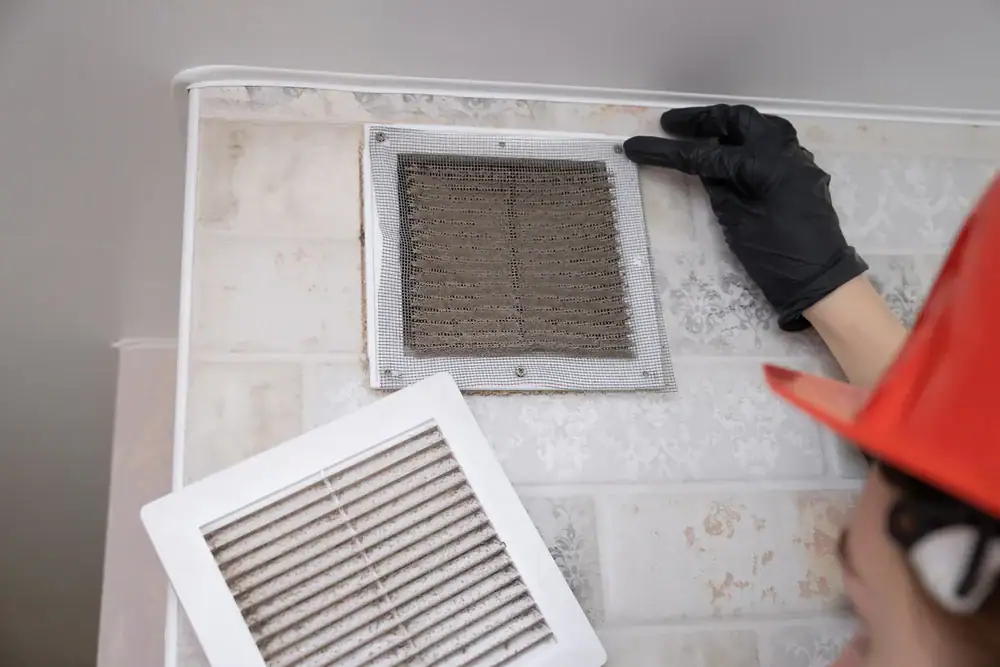
We start with an inspection—not a sales pitch. We look at your vents, check for visible mold or debris, and assess airflow issues. If your ducts don’t need cleaning, we’ll tell you. If they do, we’ll show you why before we start.
Next, we seal off your vents to create negative pressure and prevent cross-contamination. Our truck-mounted Power Vac system pulls up to 16,000 cubic feet per minute—compare that to the portable units some companies use that max out around 400 CFM. That difference matters when you’re trying to pull years of dust, pet dander, and mold spores out of sheet metal ductwork.
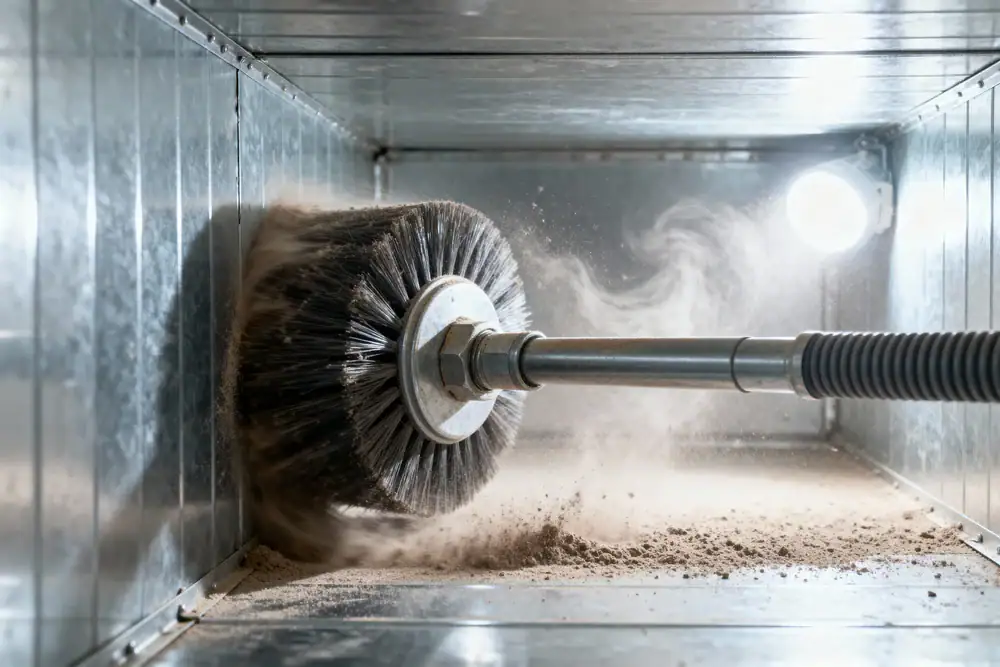
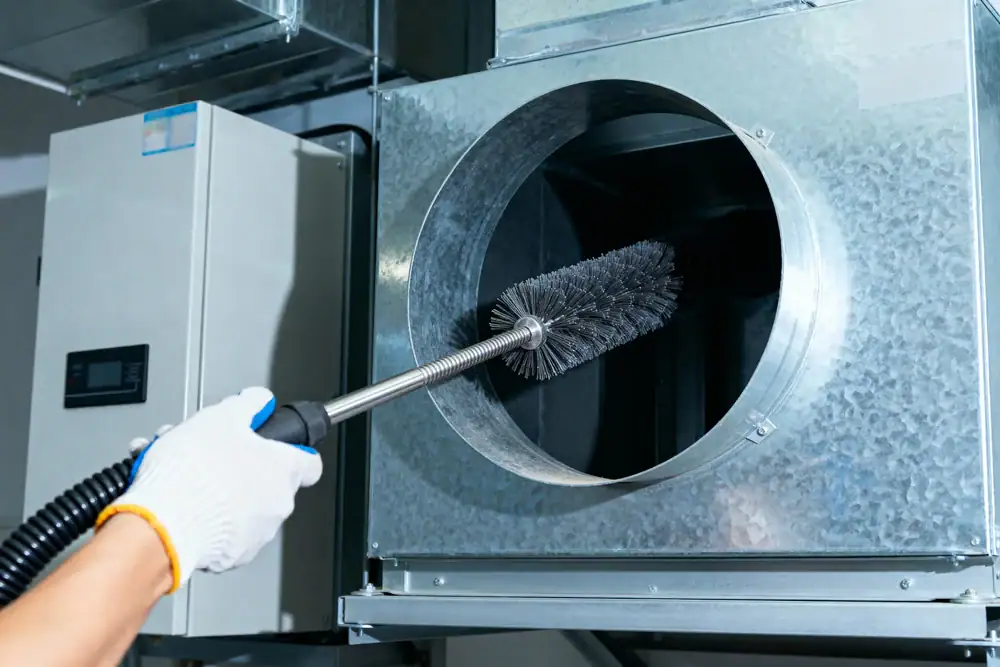
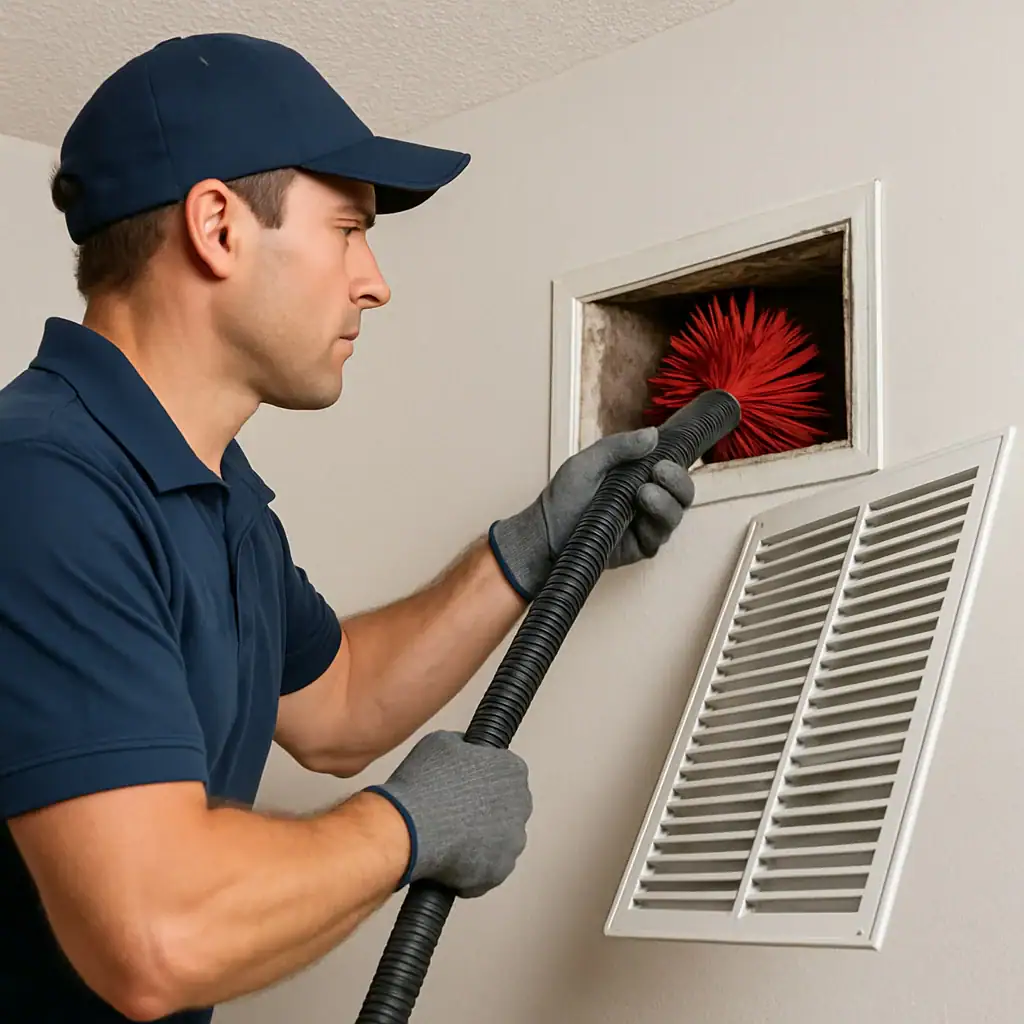
We use compressed air and rotary brushes to dislodge debris stuck to duct walls, then vacuum it out with HEPA filtration so nothing recirculates into your home. If there’s mold or odor, we can apply a sanitizing fog after the cleaning. If your dryer vent is clogged—which is common and dangerous—we’ll handle that at the same time.
You get a walkthrough when we’re done, plus before-and-after photos. No mystery charges. No upsells for “extra” vents we “discovered.” Just a clear scope of work and documentation you can keep for your records or send to your insurance company.
Ready to get started?
You get a full system cleaning—supply and return ducts, registers, grilles, and the main trunk lines. We inspect your HVAC unit and blower assembly for buildup that could be feeding back into your ductwork. If your dryer vent needs attention, that’s part of the conversation too—clogged dryer vents are a leading cause of house fires, and they’re easy to miss until lint starts backing up.
In Hazelwood, where the median home value sits around $217,300 and many properties date back decades, we see a lot of ductwork that’s never been touched. Dust settles. Mold grows in damp spots after a humid summer or a minor roof leak. Pet hair and dander build up if you’ve had animals in the house. Every time your system kicks on, it’s pushing all of that back into your living space.
We use HEPA-filtered vacuums, wear shoe covers, and contain work areas so we’re not tracking debris through your home. If we find mold, we’ll address the moisture source—not just clean the surface and call it done. And if your ducts were affected by fire or smoke damage, we’ll coordinate that cleanup with any other restoration work you need.
You’ll also get a 14-day follow-up to make sure airflow improved and any odors are gone. We’re not interested in one-time jobs. We’re interested in fixing the problem so it stays fixed.
Most homes benefit from duct cleaning every three to five years, but that timeline shifts depending on a few factors. If you have pets, you’re dealing with more dander and hair circulating through your system. If someone in your household has asthma or allergies, you’ll want to clean more often—especially if symptoms flare up indoors.
Hazelwood’s older housing stock also plays a role. Homes built before modern HVAC standards often have ductwork that wasn’t sealed properly, which means more dust infiltration from attics, crawl spaces, and wall cavities. If you’ve had recent water damage, a roof leak, or high humidity in your basement, mold can start growing in ducts within 24 to 48 hours.
You should also clean after any renovation or remodeling project. Drywall dust, sawdust, and construction debris get pulled into your return vents and coat the inside of your ductwork. If you’ve just moved into a home and don’t know the duct cleaning history, it’s worth having them inspected. You don’t want to inherit the previous owner’s problem.
Legitimate air duct cleaning in the Indianapolis metro typically runs between $350 and $600, depending on the size of your home, the number of vents, and the condition of your ductwork. If you see offers for $75 or $99, that’s bait-and-switch pricing. Those companies show up, do a surface cleaning, then upsell you $1,500 to $5,200 for the “real” work.
We use Xactimate pricing, which is the same system insurance companies use to estimate restoration costs. That means transparent, line-item pricing with no surprise fees. If your ducts need mold remediation, sanitizing, or dryer vent cleaning, we’ll quote that upfront—not after we’re already in your house.
For non-insurance jobs, we offer discounts for military members, seniors, first responders, and teachers. If you’re filing a claim for fire or water damage that affected your ductwork, we’ll work directly with your adjuster and provide all the documentation they need. The goal is to get your air quality back without turning the billing process into a second full-time job.
Yes, but only if the cleaning actually removes the contaminants causing your symptoms. Over 650,000 Hoosiers deal with asthma, and indoor air pollution is a major trigger—especially dust mites, pet dander, mold spores, and pollen that get trapped in ductwork and recirculated every time your HVAC runs.
When we clean your ducts, we’re pulling out the debris that’s been sitting in those vents for years. That includes the fine particulate matter that gets past your furnace filter and coats the inside of your ducts. Our HEPA filtration captures particles down to 0.3 microns, which covers most common allergens.
You’ll notice the difference if you’ve been dealing with persistent sneezing, watery eyes, nasal congestion, or respiratory irritation that gets worse when the heat or AC kicks on. But duct cleaning isn’t a cure-all. If you have a moisture problem causing mold growth, or if your HVAC filter isn’t being changed regularly, those issues need to be addressed too. We’ll walk you through what’s contributing to your indoor air quality problems and what will actually fix them—not just what sounds good in a sales pitch.
Start by looking at your vents. If you see visible dust buildup, dark streaks around the registers, or a musty smell when the system runs, that’s a sign. Pull off a floor or wall register and shine a flashlight into the duct—if you see layers of dust, debris, or discoloration that could indicate mold, it’s time.
Other red flags: uneven heating or cooling in different rooms, higher energy bills without a clear cause, or allergy symptoms that improve when you leave the house. If your blower motor is working harder than it should or you’re changing filters more often because they’re clogging fast, that points to a buildup problem inside the ductwork.
In Hazelwood, where many homes have older HVAC systems and ductwork that predates modern sealing standards, it’s common to find decades of accumulated dust, pet hair, and even rodent droppings in ducts that have never been cleaned. If you’ve had water damage, a fire, or recent construction, your ducts almost certainly need attention. We can inspect your system and show you what’s actually in there before you commit to anything.
Cheap duct cleaning uses a shop vac or a small portable unit that doesn’t have the suction power to pull debris out of your entire duct system. They might clean the registers and the first few feet of ductwork you can see, but everything deeper stays put. Then they upsell you on the “real” cleaning or walk away leaving the problem mostly untouched.
Professional air duct cleaning uses truck-mounted equipment that generates serious negative pressure—our system pulls up to 16,000 CFM, which is 40 times more powerful than most portable units. We seal your vents, create containment, and use HEPA filtration so contaminants don’t escape into your home. We also use compressed air and rotary brushes to dislodge debris that’s stuck to duct walls, not just surface dust.
You should also get documentation. We provide before-and-after photos, moisture readings if mold is involved, and a clear scope of work. If we find a problem—like a disconnected duct, a major mold issue, or a dryer vent that’s a fire hazard—we’ll show you and explain your options. You’re not guessing whether the work was done right. You’re seeing proof.
Yes, and we recommend it. Clogged dryer vents are one of the leading causes of house fires in the U.S., and most homeowners don’t realize how much lint builds up in the vent line between the dryer and the exterior exhaust. If your dryer is taking longer to dry clothes, running hotter than usual, or shutting off mid-cycle, that’s a clogged vent.
We use the same high-powered vacuum and rotary brush system to clear dryer vents that we use for ductwork. The process removes lint, debris, and any blockages in the vent line, which improves dryer efficiency and reduces fire risk. It also cuts down on energy costs—your dryer won’t have to run two or three cycles to dry a single load.
If you’re already having your air ducts cleaned, it makes sense to handle the dryer vent at the same time. We’re already on-site with the equipment, and it’s a quick add-on that prevents a much bigger problem down the road. We’ll inspect the vent line, clear the blockage, and make sure the exterior exhaust hood is functioning properly so moisture and lint aren’t venting back into your home.
Other Services we provide in Hazelwood