Hear from Our Customers
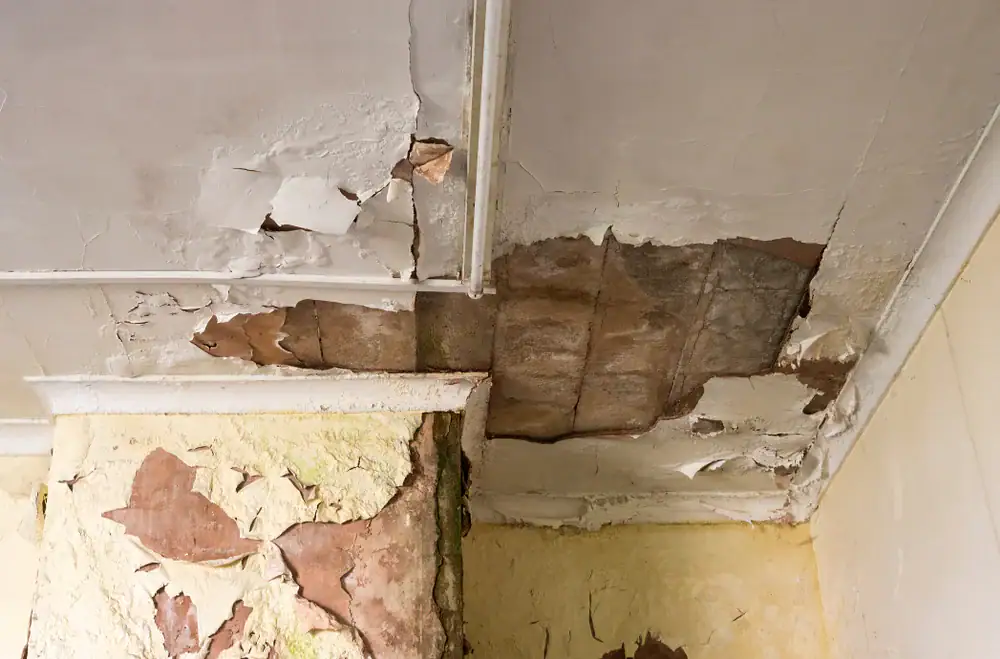
You’re not looking for a lecture on water damage. You need someone who picks up the phone, shows up fast, and knows exactly what to do.
That’s what happens when you call. Within 60 to 90 minutes, an IICRC-certified crew arrives at your door with industrial extraction equipment, moisture meters, and a documented plan. We contain the affected area to protect the rest of your home, pull standing water, set up commercial-grade dehumidifiers and air movers, and start logging everything your insurance company will ask for.
By the time you’re off the phone with your adjuster, you’ll already have photos, moisture maps, and a timeline. No guesswork. No waiting around hoping someone calls you back.
The difference between catching water damage early and dealing with mold, warped floors, or a denied claim often comes down to the first few hours. You get those hours back when the response is this fast and this organized.
We’ve been handling water emergencies across the Indianapolis area since 2016. Every technician on our team holds IICRC certifications in Water Restoration, Applied Structural Drying, and Microbial Remediation—the credentials your insurance company expects and your home deserves.
We’re not a national franchise with rotating subcontractors. You get the same local crew, the same quality standards, and the same person managing your claim from start to finish.
Holaday Hills and Dales sits in an area where aging infrastructure, hard water buildup, and Indiana’s freeze-thaw cycles create real risk. Basement seepage, burst supply lines, and water heater failures aren’t rare here—they’re predictable. That’s why we built our response model around speed, transparency, and documentation that actually holds up when you file a claim.
First, you talk to a real person—not a voicemail, not an answering service. We confirm your address, ask a few quick questions about what happened, and dispatch a crew immediately.
When the team arrives, we assess the source, stop any active water flow if safe to do so, and map out the affected zones using thermal imaging and moisture meters. Then we extract standing water, move or elevate furniture, and set up containment barriers with HEPA filtration to keep unaffected rooms clean and dry.
Drying equipment runs continuously for three to five days depending on materials and saturation levels. Our techs return every 48 hours to take new moisture readings, adjust airflow, and update the documentation log. You’ll get progress photos and notes after every visit.
Once everything hits the EPA and IICRC target moisture levels, we remove the equipment, walk the space with you, and schedule a follow-up two weeks later to confirm nothing’s shifted. If reconstruction is needed—drywall, flooring, trim—we handle that too under the same claim and same point of contact.
Ready to get started?
Every water damage restoration service we run includes emergency water extraction, moisture mapping, thermal imaging, structural drying with commercial dehumidifiers and air movers, antimicrobial treatment where needed, contents pack-out and climate-controlled storage if your belongings are at risk, and full photo and written documentation formatted for insurance submission.
If the damage originated from a sewage backup, storm surge, or Category 3 contamination, we escalate to biohazard protocols with proper PPE and disposal. If your HVAC system pulled in moisture or smoke during a related event, we clean the ductwork before reintroducing air into your living space.
Indiana saw 64 flooding or heavy rain events in 2024 alone. Holaday Hills and Dales homeowners also deal with iron, sulfur, and sediment issues tied to older water systems—problems that quietly corrode pipes until a small leak becomes a flooded basement. We see it constantly.
That’s why our process doesn’t just dry your home. It identifies why the water got in, documents the full scope for your adjuster, and gives you a clear repair path so this doesn’t turn into a six-month nightmare of contractors who don’t show up or change their estimates halfway through.
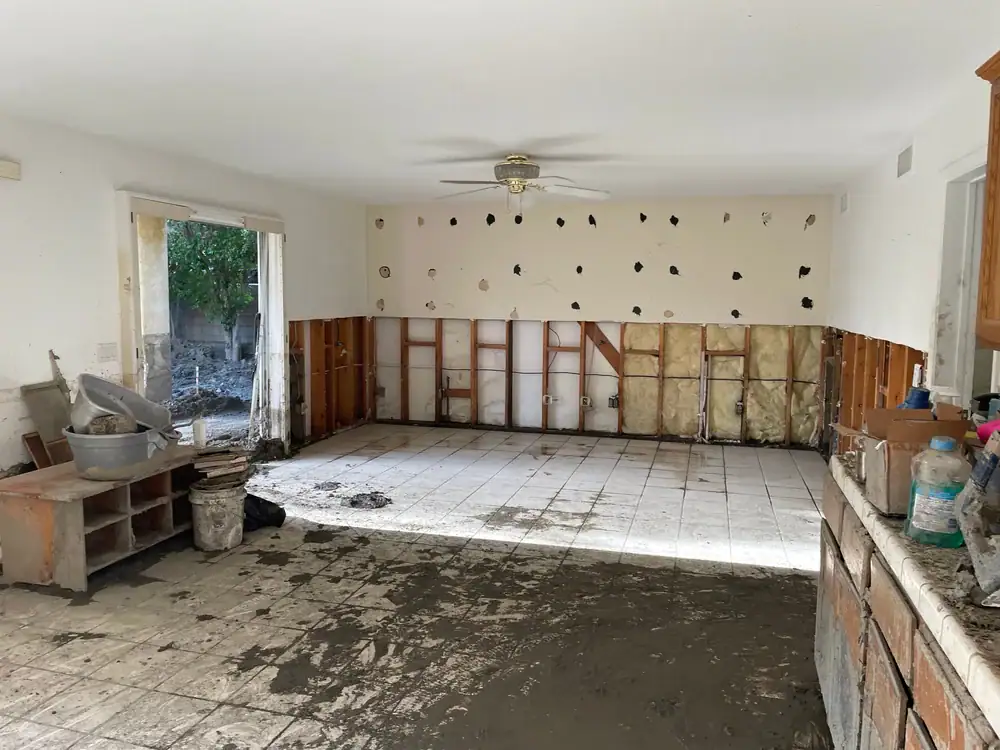
We guarantee a 60 to 90 minute on-site arrival for water damage emergencies in Holaday Hills and Dales and throughout the Carmel area. That’s not an estimate—it’s our standard.
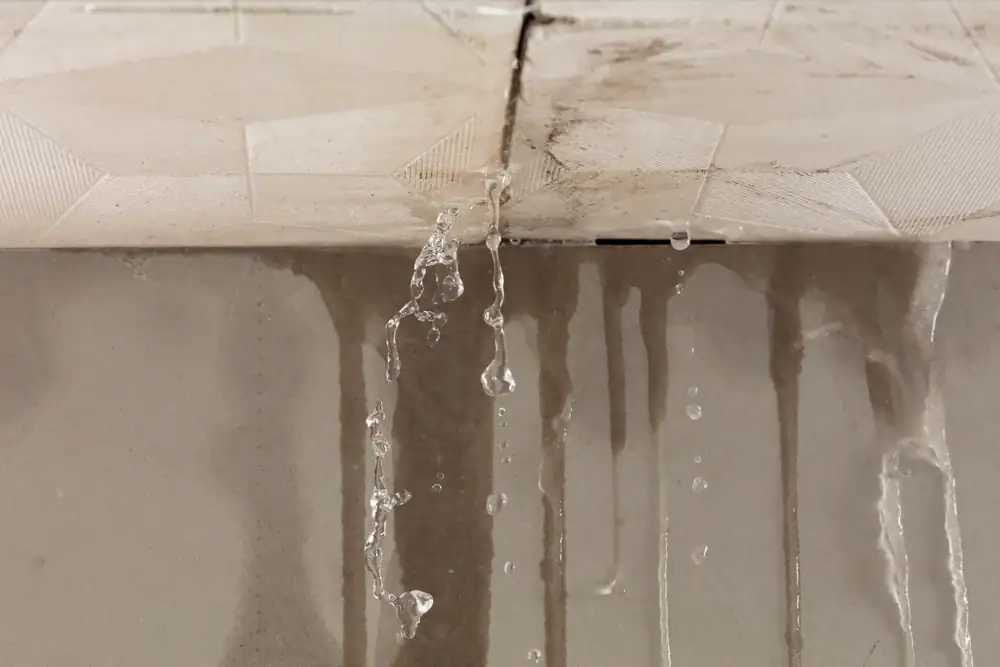
The reason speed matters this much is simple: water spreads fast, and the damage compounds every hour. What starts as a contained leak in a bathroom can soak through subfloors, seep into wall cavities, and create conditions for mold growth within 24 to 48 hours.
When you call our emergency line, you speak to someone immediately—never a voicemail. We dispatch a certified crew right away with all the equipment needed to start extraction and drying on the first visit. You’re not waiting for a callback or a scheduling window two days out.
Most homeowners policies cover sudden and accidental water damage—things like burst pipes, appliance malfunctions, roof leaks from storm damage, and supply line failures. They typically don’t cover gradual damage from long-term leaks, lack of maintenance, or flooding from external sources unless you carry separate flood insurance.
The key to getting your claim approved is documentation. Adjusters want to see proof of the source, the extent of damage, and a clear timeline of mitigation efforts. That’s why we photograph everything, log moisture readings at multiple intervals, and format our estimates in Xactimate—the same software your insurance company uses.
We also work directly with your adjuster and handle billing through your carrier when possible. You’re not stuck paying out of pocket and waiting months for reimbursement. If there’s any question about coverage, we flag it early so you’re not blindsided after the work is done.
Drying time depends on how much water entered, what materials got wet, and how quickly mitigation started. Most residential water damage jobs take three to five days of active drying with professional equipment running continuously.
Carpet and drywall dry faster than hardwood, tile backing, or structural lumber. Basements take longer because concrete wicks moisture and airflow is often limited. If water sat for more than 24 hours before we arrived, expect the longer end of that range.
We don’t pull equipment based on a calendar. We pull it when moisture meters confirm every affected material has returned to normal levels per IICRC standards. That’s usually 12 to 15 percent moisture content for wood and under 1 percent for concrete. Rushing this step is how you end up with mold, warping, and odor problems three weeks later—and a second claim your insurance won’t cover.
Water damage cleanup means extracting standing water, drying the structure, and treating for microbial growth. Restoration means putting your home back to pre-loss condition—replacing damaged drywall, flooring, baseboards, insulation, and anything else that can’t be salvaged.
Some companies only do the cleanup and then refer you to a general contractor for repairs. That adds time, coordination headaches, and usually means you’re managing two separate contracts and two separate invoices under the same claim.
We handle both phases in-house. Same crew, same project manager, same insurance claim. Once drying is complete and your adjuster has signed off on scope, our rebuild team steps in and finishes the job. You’re not waiting weeks for someone else to bid the work or wondering if the new contractor is going to honor the pricing your adjuster already approved.
It depends on the extent of the damage and where it’s located. If water affected a basement, laundry room, or single bathroom, most families stay in place without issue. If multiple rooms are involved, or if there’s sewage contamination, you’ll likely need to relocate temporarily.
The equipment is loud—commercial air movers and dehumidifiers run 24/7 and sound like a jet engine in your hallway. We set up containment barriers with plastic sheeting and HEPA filtration to isolate the work zone, but you’ll still hear it and feel the airflow.
Safety is the bigger concern. If there’s any Category 3 water involved (sewage, toilet overflow, exterior flooding), we treat the area as a biohazard and restrict access until cleaning and disinfection are complete. We’ll walk you through what’s safe and what’s not during the initial assessment. If you do need to leave, we offer contents pack-out and secure storage so your belongings stay protected while the work happens.
Visible mold usually shows up as black, green, or white patches on walls, ceilings, or around baseboards. But you’ll often smell it before you see it—a musty, earthy odor that doesn’t go away even after cleaning.
Mold starts growing within 24 to 48 hours in the right conditions: moisture, warmth, and organic material like drywall or wood. If water sat for more than a day before drying started, assume spores have begun colonizing even if you don’t see surface growth yet.
That’s why our process includes antimicrobial treatment as a standard step, not an upsell. We also use moisture meters and thermal cameras to check inside wall cavities and under flooring where hidden saturation creates perfect mold habitat. If we find active growth beyond surface level, we shift into full mold remediation mode with containment, HEPA vacuuming, and material removal. You’ll know exactly what we found, where it is, and what it takes to fix it before any additional work starts.
Other Services we provide in Holaday Hills And Dales