Hear from Our Customers
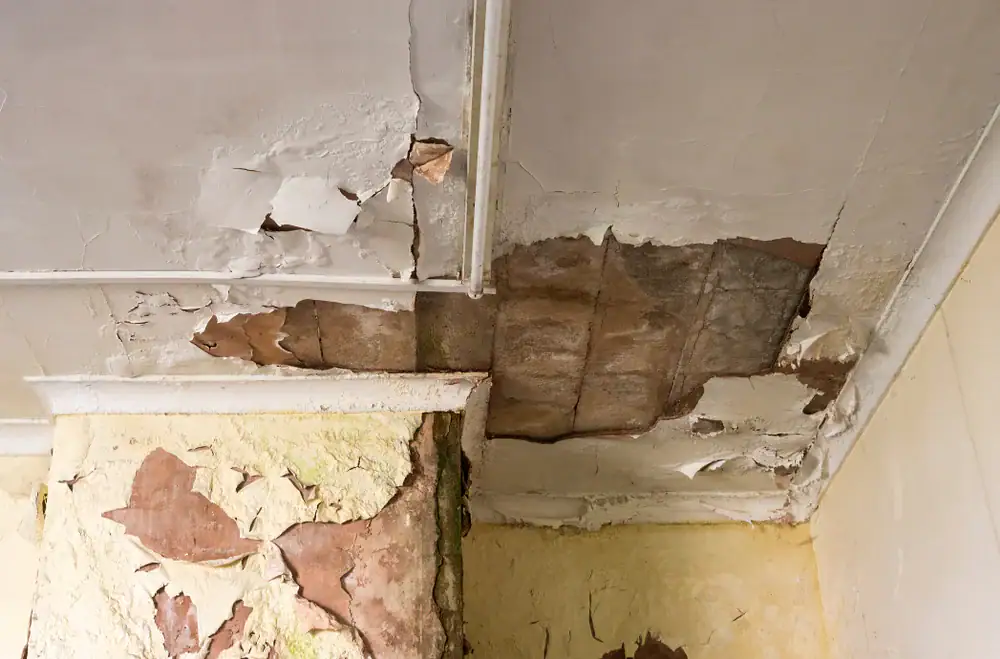
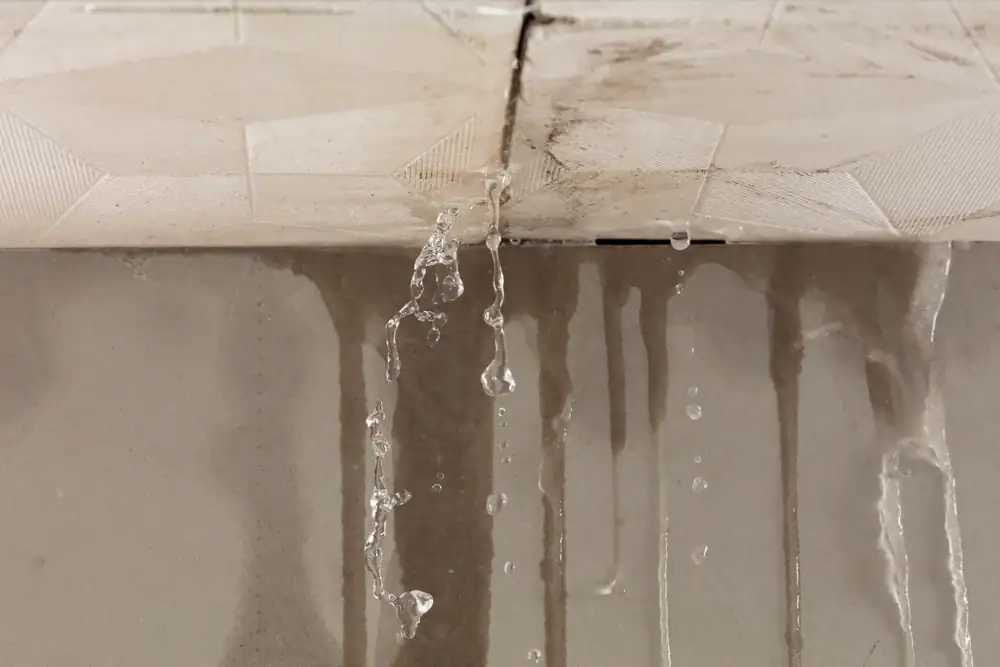
Water doesn’t wait, and neither should you. In Imperial Hills’ humid climate, mold can start forming within 24 to 48 hours of water exposure. That’s your window.
When you call us, you’re not just getting water removed. You’re getting moisture mapped with professional-grade equipment that finds hidden water in walls, floors, and structural components. You’re getting HEPA filtration and containment barriers that protect the rest of your home while we work. You’re getting documentation that your insurance company actually accepts.
The difference between calling today and calling tomorrow can be thousands of dollars in additional damage. Drywall that could have been saved needs replacing. Hardwood that could have dried out starts buckling. And mold remediation gets added to a bill that didn’t need to exist.
We’ve worked in Imperial Hills long enough to know what Lake County winters do to pipes and what spring storms do to basements. Our job is to get your property back to normal before secondary damage turns a manageable situation into a complete renovation.
We’ve been handling water damage restoration in Imperial Hills and throughout Indianapolis since 2016. That means we’ve seen what freeze-thaw cycles do to your pipes when temperatures drop below 10 degrees. We know how the combined storm and sewer systems in this area can back up into basements during heavy rains.
Our team holds IICRC certifications in Water Restoration (WRT), Applied Structural Drying (ASD), and Applied Microbial Remediation (AMRT). We’re also EPA RRP certified and BBB accredited. Those credentials matter because water damage restoration isn’t just about running fans. It’s about psychrometry, equipment calculations, and knowing exactly how long materials need to dry in Indiana’s humidity.
When you’re dealing with a property valued near half a million dollars, you need a water damage company that documents everything, communicates clearly with your insurance adjuster, and shows up when they say they will. We answer our phone live 24/7 because water emergencies don’t happen on a schedule.
Here’s what happens when you call. You reach a real person, not a voicemail. We dispatch a crew immediately with a 60 to 90 minute arrival window. When we get there, we’re wearing shoe covers and carrying moisture meters, not just shop vacs.
First, we stop the water source if it’s still active. Then we assess the full scope of damage with thermal imaging and moisture mapping. You’ll see exactly where water traveled and what materials are affected. We extract standing water, remove unsalvageable materials, and set up industrial drying equipment calibrated for your specific situation.
Within 24 hours, you get a full report with photos, moisture readings, and a drying plan. Every 48 hours after that, we update you on progress. We’re checking moisture levels daily and adjusting equipment as needed. Most residential water damage jobs take three to five days to dry completely, but that varies based on materials affected and humidity levels.
Once everything hits acceptable moisture levels, we do a final walkthrough with you. We return 14 days later to make sure nothing was missed. If you’re filing an insurance claim, we’ve already been coordinating with your adjuster throughout the process using Xactimate pricing they recognize.
Ready to get started?
You’re getting more than just water extraction. Our flood damage restoration service includes moisture detection in hidden areas, structural drying with commercial dehumidifiers and air movers, antimicrobial treatment to prevent mold growth, and complete documentation for insurance claims.
Imperial Hills properties face specific challenges. The clay-heavy soil in this area doesn’t drain well, which means basement flooding is common during spring storms. When Indianapolis gets more than two inches of rain in an hour, sump pumps can’t keep up with the pressure on basement walls. We’ve handled dozens of these situations.
We also deal with the aftermath of frozen pipes. Lake County winters are brutal, and when pipes burst inside walls, water can run for hours before anyone notices. That’s when you need advanced drying techniques and someone who knows how to open up walls without causing unnecessary damage.
If your water damage involves sewage backup from the combined storm and sewer system, we handle that too. That’s a biohazard situation requiring different protocols, protective equipment, and disposal methods. We’re certified for trauma and biohazard cleanup, so we can manage the entire job regardless of water category.
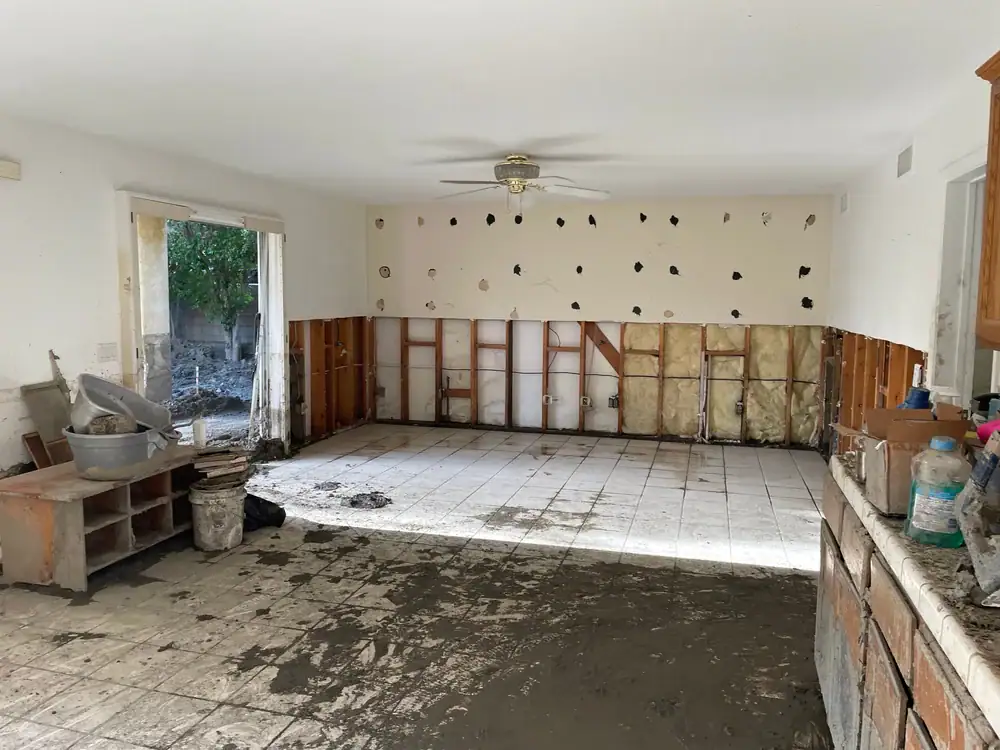
We dispatch crews within 60 to 90 minutes of your call, 24 hours a day. That response time matters because water damage gets exponentially worse the longer it sits.
In the first few hours, water is still spreading through porous materials. By hour 12, drywall is saturated and flooring adhesives start failing. By hour 24, mold spores are activating in Indiana’s humid climate. Our fast response stops that progression before it becomes a full-scale remediation project.
When we say 60 to 90 minutes, that’s from phone call to boots on your property. We’re not scheduling you for tomorrow or giving you a four-hour window. Water emergencies need immediate attention, and our dispatch system is built around that reality.
Most homeowner policies cover sudden and accidental water damage, like burst pipes or appliance failures. They typically don’t cover gradual damage from long-term leaks or flooding from external water sources unless you have separate flood insurance.
The key is documentation. Insurance adjusters need to see what happened, what got damaged, and what restoration steps are necessary. We photograph everything, create detailed moisture maps, and use Xactimate software to estimate costs in the format adjusters expect. That documentation makes the claims process significantly smoother.
We also offer a dedicated claims liaison who communicates directly with your insurance company. They speak the same language adjusters do and know what documentation they need. Many of our clients never have to call their insurance company themselves. We handle that coordination so you can focus on getting your property back to normal.
Mold prevention comes down to speed and thoroughness. If we get materials dried within 24 to 48 hours, mold doesn’t have time to establish. That’s why our rapid response time matters so much.
We use moisture meters to track drying progress in real time. We’re not guessing when something is dry. We’re measuring it against IICRC standards for acceptable moisture content in different materials. Wood, drywall, and concrete all have different drying requirements, and our equipment is calibrated accordingly.
We also apply antimicrobial treatments to affected areas as a preventive measure. In Imperial Hills’ humid climate, you can’t be too careful. Indiana’s humidity adds up to 24 hours to normal drying timelines, which is why we use commercial-grade dehumidifiers that pull moisture out of the air while fans circulate it. If we do find mold growth, we’re AMRT certified to handle remediation properly.
It depends on how long water was present and what materials are involved. Drywall can often be saved if we get it dried quickly. If it’s been saturated for more than 48 hours, it usually needs replacing because the paper facing becomes a food source for mold.
Hardwood flooring is tricky. Solid hardwood can sometimes be dried and refinished if we catch it early. Engineered hardwood and laminate typically need replacement because the layers separate once saturated. Carpet and pad almost always need to go if they’ve been soaked, especially if the water came from a contaminated source.
We remove only what’s necessary. Our moisture mapping shows us exactly which sections are affected, so we’re not tearing out entire rooms when only one wall got wet. After everything is dried and damaged materials are removed, we can handle the reconstruction too. You’re not calling a separate contractor to put your property back together.
Yes. We handle water damage restoration for residential properties, multi-family buildings, and light commercial spaces throughout Imperial Hills. Property managers appreciate our communication system because they’re often coordinating between tenants, owners, and insurance companies.
Commercial water damage often means business interruption, which makes speed even more critical. We can work after hours or on weekends to minimize disruption. Our containment barriers and HEPA filtration let us isolate affected areas so the rest of the building stays operational.
We’re also experienced with the documentation commercial properties require. That means detailed loss reports, certificate of insurance, and coordination with facility managers or building engineers. If you manage multiple properties in the Imperial Hills area, we can set up an account that streamlines the process when emergencies happen.
Stop the water source if you can do it safely. If it’s a burst pipe, shut off your main water valve. If it’s an appliance leak, unplug the appliance and turn off its water supply. Don’t walk through standing water if electrical outlets or appliances are nearby.
Move valuable items to dry areas if you can reach them safely. Don’t try to remove water yourself with a household vacuum. Standard shop vacs aren’t designed for large water volumes and can create electrical hazards. Don’t use your furnace or air conditioning system if water has reached your HVAC components.
Then call us immediately. The faster we start extraction and drying, the more we can save. While you’re waiting for us to arrive, you can take photos for your insurance claim, but don’t start tearing out materials or throwing things away until we’ve documented everything. Your insurance company needs to see the damage in its original state.
Other Services we provide in Imperial Hills