Hear from Our Customers
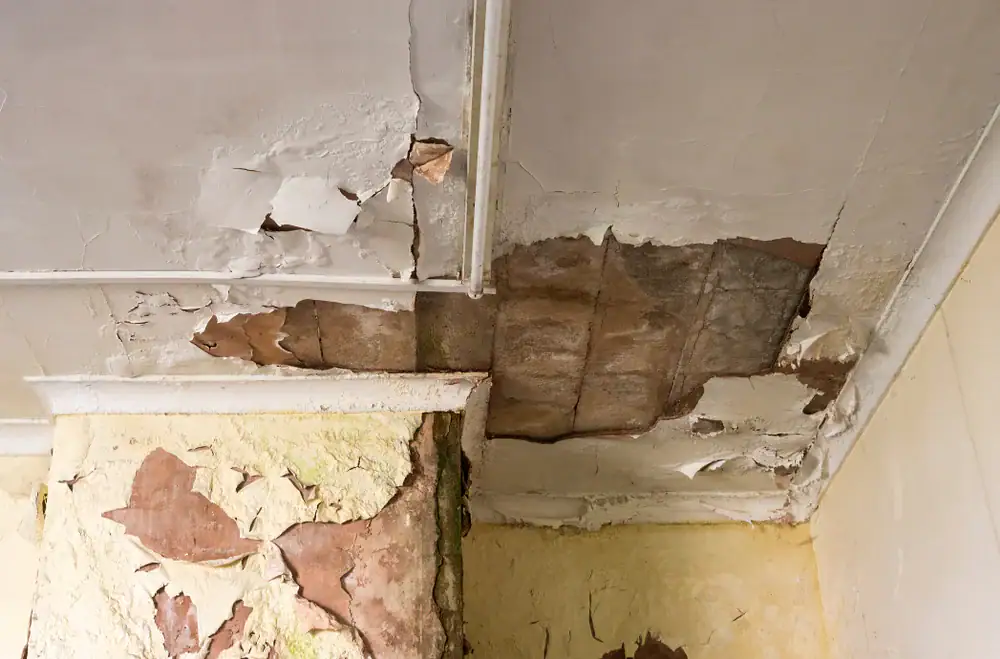
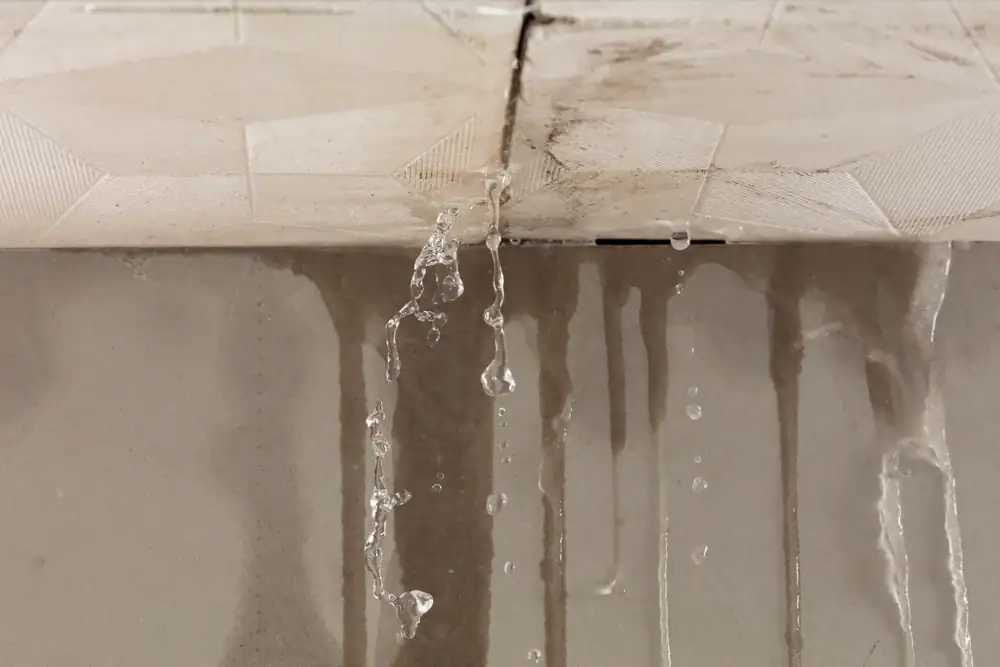
Every hour water sits in your property, the damage spreads. Drywall wicks moisture up the studs. Subfloors start to buckle. Mold spores find the humidity they need to colonize in 24 to 48 hours.
Fast response stops that cascade. You’re not just paying for extraction and fans—you’re buying back the structural integrity of your building and avoiding a secondary disaster that costs twice as much to fix.
When our crew leaves, your property is dry, your insurance adjuster has every photo and moisture reading they need, and you have a clear timeline for what comes next. No guessing. No waiting on callbacks. No wondering if the job was done right.
That’s what emergency water damage service should look like. You get your property back to safe, dry, and documented—so you can move forward instead of managing a crisis.
We’ve been handling water damage restoration in Maplewood, IN since 2016. We’re IICRC-certified in Water Damage Restoration, Applied Structural Drying, and Applied Microbial Remediation—the credentials your insurance company looks for and the training that ensures the job gets done correctly.
Maplewood’s older housing stock and freeze-thaw cycles create specific risks. Burst pipes in crawl spaces, ice dam leaks, and storm-driven flooding aren’t hypotheticals here—they’re seasonal realities. We’ve built our protocols around what actually happens in this area, not a generic checklist.
You’ll reach a live person when you call, day or night. We’re on-site within 60 to 90 minutes, and we start documentation immediately because we know how insurance timelines work. BBB-accredited, locally operated, and built for the calls that can’t wait until Monday.
You call. We answer—live, not voicemail. Within 60 to 90 minutes, a certified technician is on-site with moisture meters, thermal imaging, and extraction equipment.
First, we stop the water source if it’s safe to do so. Then we extract standing water, map moisture levels in walls and floors, and set up containment to protect unaffected areas. HEPA filtration runs to keep airborne contaminants out of your breathing space.
Within 24 hours, you receive full photo documentation, a moisture map, and a scope of work. Every 48 hours after that, you get a progress update with new readings and photos. We don’t leave you wondering what’s happening.
Drying typically takes three to five days depending on materials and saturation levels. Once moisture readings hit industry-standard dry goals, we do a final walkthrough with you, document everything for your insurer, and follow up 14 days later to confirm no new issues surfaced. If you need contents packed out, odor control, or reconstruction after demo, we handle that too—one call, one crew, one clear process.
Ready to get started?
You’re not just getting water pumped out. You’re getting a full mitigation process designed to prevent secondary damage and meet insurance documentation standards.
That includes emergency water extraction, structural drying with commercial dehumidifiers and air movers, moisture mapping with thermal imaging, antimicrobial treatment where needed, and HEPA air filtration. We protect your unaffected rooms with physical containment barriers and wear shoe covers on every job.
In Maplewood, IN, we also handle the specific issues this area sees regularly—crawl space flooding from poor drainage, basement seepage during heavy rains, and burst pipe scenarios during January and February freezes. If your HVAC system pulled in smoke or water contacted ductwork, we clean that too.
You also get a dedicated insurance liaison who speaks Xactimate, the pricing software your adjuster uses. We’ll bill your carrier directly if you prefer, and we align our estimates with industry standards so there’s no back-and-forth over line items. For non-insurance work, we offer discounts for military members, seniors, first responders, and teachers—because not every emergency is covered, and you shouldn’t be penalized for that.
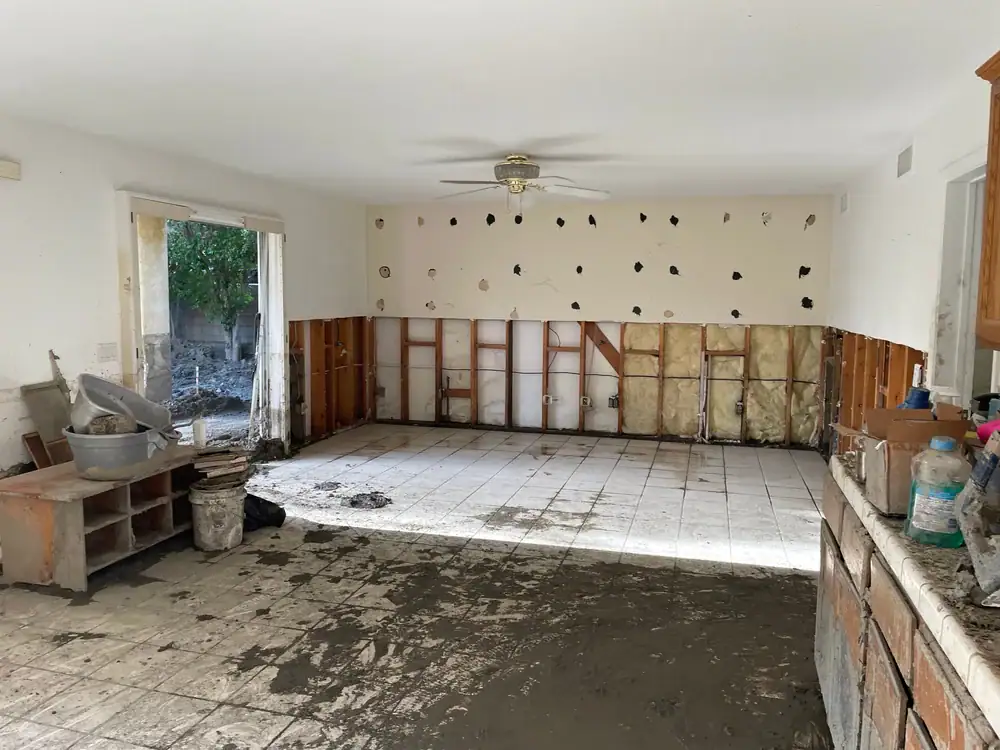
We’re on-site in 60 to 90 minutes after your call, day or night. That’s not an estimate—it’s our standard response window for emergency water removal in Maplewood, IN.
Speed matters because water doesn’t wait. The longer it sits, the deeper it penetrates, the more materials it ruins, and the higher your chance of mold growth within 24 to 48 hours. Our trucks are stocked and our crews are on standby specifically so you don’t lose hours waiting for someone to “fit you in.”
When we arrive, we’re ready to extract, contain, and start drying immediately. You’re not paying for a quote visit—you’re getting active mitigation from minute one.
It depends on the source of the water. Most policies cover sudden and accidental damage—like a burst pipe, appliance failure, or storm-driven roof leak. They typically don’t cover gradual leaks, flooding from external sources, or maintenance issues you knew about and didn’t fix.
We work directly with your insurance carrier to document everything they need: photos, moisture maps, equipment logs, and a detailed scope written in Xactimate, the software adjusters use to price claims. That alignment speeds up approval and reduces the chance of disputed line items.
If your claim gets denied or you’re not sure about coverage, we’ll walk you through your policy language and give you a transparent estimate so you can make an informed decision. We also offer payment plans and discounts for non-insurance jobs because not every emergency fits neatly into a policy.
Most residential water damage jobs take three to five days to reach dry standard, but it depends on how much water entered, what materials got wet, and how quickly we started mitigation.
Hardwood floors and drywall dry faster than tile set in mortar or concrete slabs. A half-inch of water in a finished basement dries faster than two feet in a crawl space with dirt floors. We use moisture meters and thermal imaging to track progress in real time, not guesswork.
You’ll get updated readings every 48 hours so you know exactly where the job stands. We don’t pull equipment early to close the job faster—we pull it when the materials hit the moisture content they’re supposed to be at. Cutting corners on dry time is how you end up with mold three weeks later.
Mitigation is the emergency response—stopping the damage, extracting water, drying the structure, and preventing mold. Restoration is the rebuild—replacing drywall, repainting, reinstalling flooring, and putting your property back to pre-loss condition.
We handle both, but they’re billed separately because mitigation happens first and can’t wait. Restoration happens after your insurance adjuster agrees on scope and pricing. Some companies only do mitigation and then hand you off to a general contractor. We keep it in-house so you’re not managing two teams, two timelines, and two sets of paperwork.
If you only need mitigation because the damage was caught early, that’s all you pay for. If you need full reconstruction after demo, we give you one estimate, one point of contact, and one crew that already knows your property.
Yes. We work with every major carrier and most regional providers. We’re familiar with their documentation requirements, their preferred pricing software, and their timelines.
Our estimators write in Xactimate, which is the same platform your adjuster uses. That means fewer disputes over pricing, faster approvals, and less back-and-forth. We’ll also communicate directly with your adjuster if you authorize it—sending photos, moisture logs, and progress updates so you’re not playing middleman during an already stressful situation.
If you want us to bill your insurance directly, we can do that too. You’ll still be responsible for your deductible and any non-covered items, but you won’t have to front the full cost and wait for reimbursement. We’ve been doing this since 2016—we know how to navigate the claims process without adding to your workload.
Yes. Mold spores are everywhere, but they need moisture to grow. When water sits for 24 to 48 hours in humid conditions, those spores colonize. Once that happens, you’re not just dealing with water damage anymore—you’re dealing with a mold remediation project.
We prevent that by drying your property fast and thoroughly. That means extraction within the first few hours, structural drying with dehumidifiers and air movers, and moisture monitoring until readings confirm everything is dry. We also treat affected areas with antimicrobial solutions where appropriate and run HEPA filtration to capture airborne spores during the process.
If mold is already present when we arrive, we’re IICRC-certified in Applied Microbial Remediation and can handle that too. But the goal is always to dry fast enough that mold never gets a chance to start. That’s why response time and proper equipment matter—it’s not just about getting the water out, it’s about controlling what happens next.
Other Services we provide in Maplewood