Water damage in Greenwood demands immediate action. Learn the complete restoration process, insurance coverage, typical costs, and how fast professional response prevents mold and saves your property.
Central Indiana’s climate creates year-round water damage risks. Indianapolis receives around 45 inches of rain annually, with some Indiana areas seeing up to 47 inches depending on location. Seasonal rainfall, winter freezes, and the region’s soil composition all contribute to water intrusion problems.
During spring and fall rainy seasons, the soil around your foundation becomes oversaturated. This increases hydrostatic pressure that pushes water into basements through cracks and porous concrete. It’s not whether water will find weak points in your foundation—it’s when.
Winter brings frozen pipe emergencies. Temperatures dropping below 20 degrees for several consecutive days put uninsulated pipes at serious risk. Pipes along exterior walls, in attics, basements, crawl spaces, and under kitchen cabinets face the greatest danger. Once a pipe bursts, four to eight gallons of water flow out every minute, causing thousands of dollars in damage within an hour.
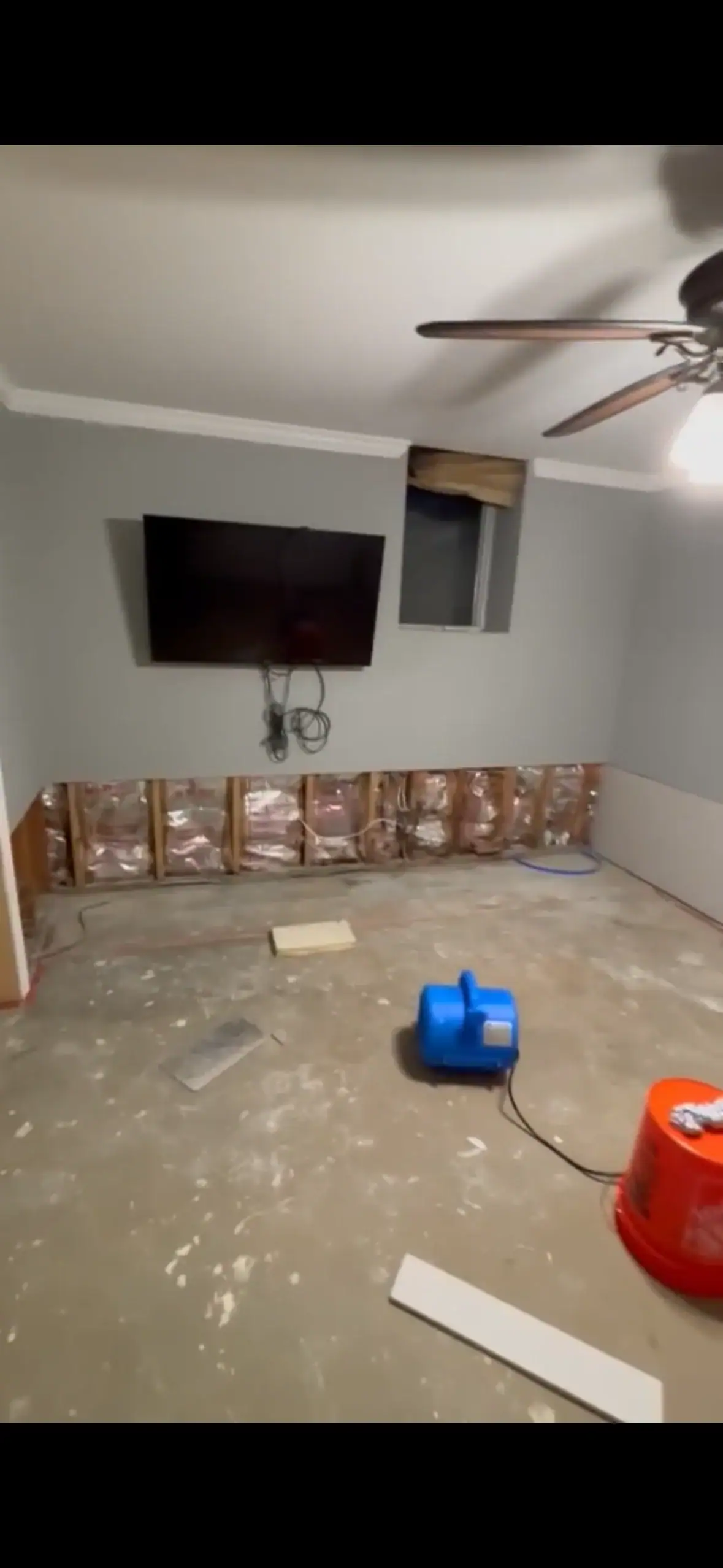
Flooded basements represent the most common water damage emergency in Indianapolis and surrounding Johnson County areas. The combination of high water tables, seasonal rainfall, and sump pump failures creates constant risk for basement flooding.
Your basement sits below ground level, making it vulnerable by design. Water naturally flows to the lowest point, and your basement becomes the collection area when soil becomes saturated. Hydrostatic pressure from outside pushes water through any available opening—floor cracks, wall cracks, window wells, or the cove joint where walls meet floors.
Sump pump failures cause extensive flooding fast. During heavy rain, your sump pump works overtime. When it fails due to power outages, mechanical breakdown, or simply being overwhelmed by water volume, your basement floods rapidly. Many Johnson County homeowners discover their sump pump failed only after finding several inches of standing water covering their finished basement.
Foundation cracks allow steady water intrusion. Small cracks you barely notice become major problems during storms. Water finds these openings and flows inside, especially when hydrostatic pressure builds from saturated soil. The cracks don’t need to be large—water infiltrates through surprisingly small gaps.
Plumbing failures add another flooding source. Water heaters develop leaks. Washing machines overflow. Supply lines burst. Toilets malfunction. Any of these creates flooding, and because basements aren’t monitored constantly, damage often goes unnoticed until it’s severe.
Time matters critically with flooded basements. Within 24 to 48 hours of water exposure, mold and mildew begin developing. Drywall absorbs moisture and weakens. Carpet and padding become contaminated. Wood structures start warping. What starts as a cleanup project becomes a major restoration requiring demolition and replacement.
Professional flooded basement cleanup removes water completely, dries structural components thoroughly, and prevents mold growth. Homeowners attempting DIY cleanup with shop vacs and fans rarely remove enough moisture from wall cavities, subflooring, and insulation. Mold develops weeks later, requiring expensive remediation that insurance may not cover because the initial damage wasn’t handled properly.
Most homeowner insurance policies cover basement flooding caused by sump pump backup or drain backup if you’ve added that coverage. Standard policies don’t automatically include it. If you have a finished basement in Johnson County, you should carry at least $10,000 in backup coverage.
Burst pipe water damage happens suddenly and causes devastating destruction across Central Indiana properties. When temperatures drop below freezing for extended periods, water inside pipes freezes and expands, creating extreme pressure on pipe walls until they crack or rupture completely.
Indiana winters create perfect conditions for frozen pipes. Recent arctic cold snaps brought wind chills between -10 and -22 degrees across the state. Temperatures stayed below 20 degrees for three to four consecutive days. These conditions caused widespread pipe bursting throughout Indianapolis, Greenwood, and surrounding counties.
Uninsulated pipes face the highest risk. Pipes running along exterior walls, through unheated attics, in crawl spaces, or under kitchen cabinets on outside walls have direct exposure to freezing temperatures. Homes south of I-70 often have less insulation than northern homes because builders didn’t anticipate extreme cold. Mobile homes and older properties face even greater vulnerability.
The damage from burst pipes is immediate and severe. Four to eight gallons of water per minute flooding into your home creates chaos fast. In just 30 minutes, that’s 120 to 240 gallons spreading through your property. Ceilings collapse from water weight. Walls become saturated. Floors buckle. Electronics, furniture, and personal belongings are destroyed.
Most pipes actually burst during the thaw, not while frozen. When someone turns on a faucet before pipes completely thaw, flowing water dramatically increases pressure within the pipe, causing rupture. This is why you need to let pipes thaw naturally or thaw them very slowly and carefully with proper technique.
The average cost to repair a burst water pipe is $900 for the pipe itself. Water damage restoration gets added on top. Depending on how long water flowed and where it spread, you’re looking at several thousand dollars in additional costs for water extraction, structural drying, and repairs to damaged materials.
Prevention saves thousands. Maintaining indoor temperatures at least 55 degrees, insulating exposed pipes, sealing cracks that allow freezing air inside, and leaving faucets dripping during extreme cold all reduce risk significantly. Opening cabinet doors under sinks along exterior walls lets warm air circulate around vulnerable pipes.
If you discover frozen pipes, act carefully. Keep the affected faucet open but don’t turn off the main water supply unless the pipe has actually burst. As the frozen section melts, water flow helps melt remaining ice. If you can’t locate the frozen area or multiple pipes are frozen, call a professional immediately.
Emergency water removal after burst pipes needs to happen within the first hour. Every minute water flows causes exponentially more damage. We provide 24/7 emergency response specifically for these situations, with teams ready to arrive within 60 minutes to stop the damage progression.
Want live answers?
Connect with a Elite Clean Restoration expert for fast, friendly support.
Professional water damage restoration follows a systematic, science-based process designed to completely remove moisture, prevent mold growth, and return your property to its pre-loss condition. Understanding this process helps you know what to expect and why each step matters.
The process starts with immediate assessment and inspection. Restoration technicians identify the water source, determine damage extent, classify the water type, and assess safety hazards like electrical risks or structural instability. They document everything with photographs and moisture readings for insurance claims. This initial assessment determines the restoration strategy, equipment needed, and estimated timeline.
Speed is critical because water damage worsens exponentially with time. Within minutes, water spreads throughout your property, saturating everything in its path. Within hours, drywall begins swelling, metal surfaces start tarnishing, and furniture begins warping. Within 24 to 48 hours, mold growth begins. After a week, serious structural damage and health hazards develop that dramatically increase restoration costs.
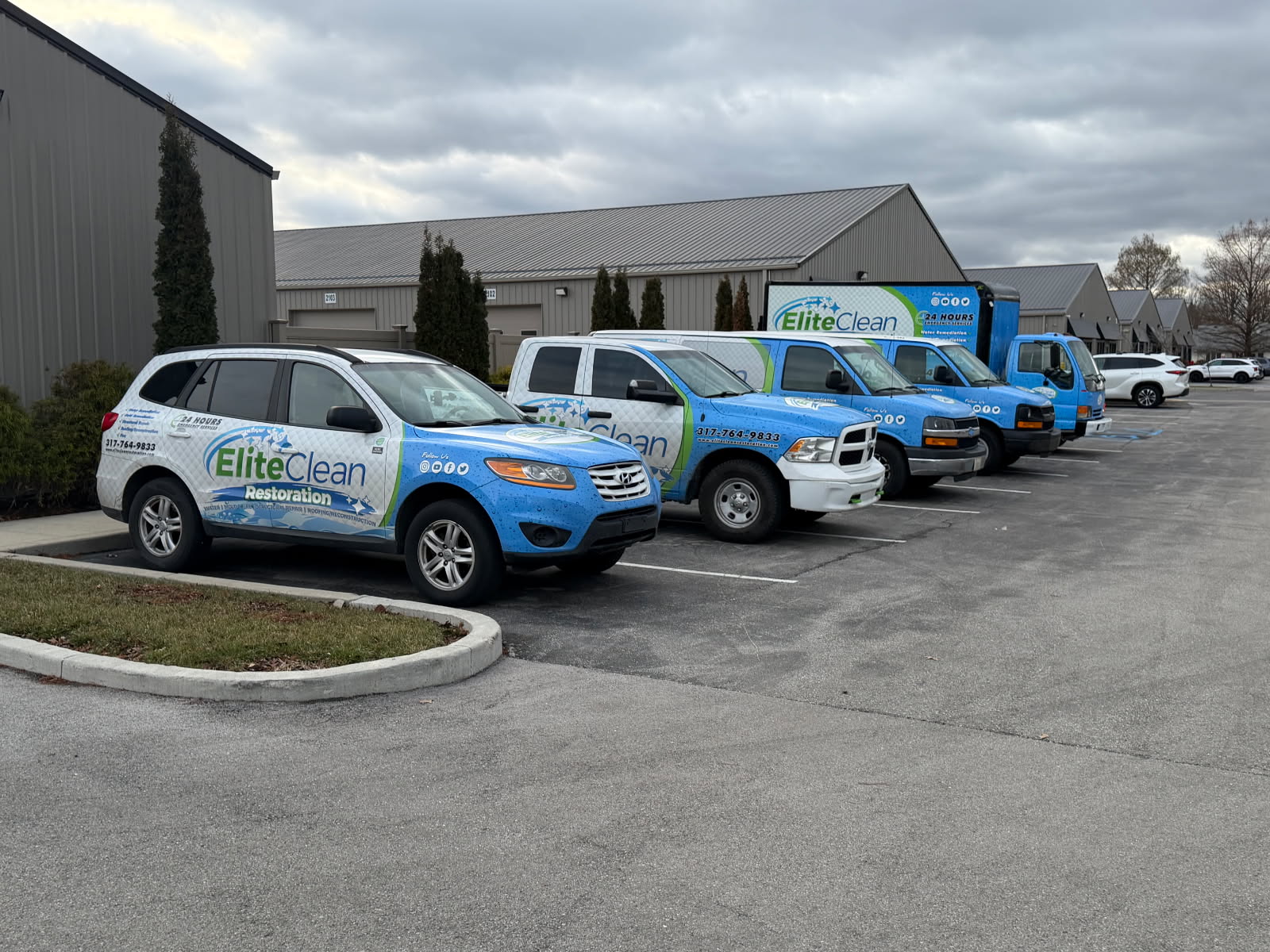
Water extraction is the first critical step in stopping damage progression. The goal is removing as much standing water as possible as quickly as possible. Every gallon removed during extraction is one less gallon that needs to evaporate during the drying phase, which reduces drying time and gets you back to normal faster.
Professional restoration companies use industrial-grade equipment that removes water far more effectively than household wet-dry vacuums or mops. Submersible pumps handle standing water in flooded basements or commercial spaces. These powerful pumps can remove thousands of gallons quickly, taking your property from flooded to damp in hours instead of days.
Truck-mounted extraction equipment provides even more power for severe flooding. This equipment sits in the restoration vehicle and uses powerful suction through hoses to pull water from your property. The capacity and speed far exceed any portable equipment.
Specialized extraction tools reach water that mops can’t touch. Weighted extractors pull water from carpet and padding. Submersible pumps remove water from crawl spaces. Extraction wands reach into corners and under cabinets. This thorough approach is critical because any water left behind creates ongoing problems.
The type of water determines the extraction approach and what materials can be saved. Clean water from supply lines requires straightforward extraction and drying. Gray water from appliances, sinks, or washing machines requires extraction plus antimicrobial treatment because it contains contaminants. Black water from sewage backups, toilet overflows, or flooding requires complete removal of porous materials because contamination makes them unsalvageable regardless of drying efforts.
Extraction happens fastest when professionals respond immediately. We can be on-site in 60 minutes or less in most cases throughout Johnson County, Hamilton County, and Hendricks County. This rapid response means extraction begins while water is still actively spreading, which prevents water from reaching additional areas and limits the overall damage footprint.
After bulk water removal, extraction continues at a more detailed level. Technicians use moisture meters to locate hidden water pockets in walls, under flooring, and within structural cavities. Pin-type moisture meters penetrate surfaces for precise readings. Pinless models scan larger areas without causing damage. Thermal imaging cameras detect temperature differences that reveal hidden moisture behind walls or under floors that you can’t see with your eyes.
Professional water extraction makes the difference between materials that can be dried and saved versus materials that must be removed and replaced. Carpet that sits in water for hours becomes unsalvageable. Drywall that stays saturated for a day needs replacement. Fast, thorough extraction preserves more of your property and reduces overall restoration costs.
Structural drying is the most critical step in water damage restoration and the step that separates professional restoration from DIY attempts that lead to mold problems months later. It’s not just about drying surfaces you can see. It’s about removing moisture trapped inside wall cavities, under flooring, within insulation, and throughout structural components where mold grows and wood rots.
Structural drying uses scientific principles and specialized equipment to completely remove all moisture from water-damaged materials. Professional restoration technicians follow industry standards established by the Institute of Inspection, Cleaning and Restoration Certification to ensure thorough, effective drying that prevents future problems.
The process involves four key components working together simultaneously. Air movers create high-velocity airflow that promotes evaporation. These aren’t regular fans—they’re industrial-grade units positioned strategically to target areas where moisture has penetrated deepest. The airflow moves across wet surfaces and through structural cavities, pulling moisture out of materials.
Dehumidifiers remove water vapor from the air. As air movers evaporate moisture from materials, that moisture enters the air as water vapor. Without dehumidifiers capturing this moisture, it would simply be reabsorbed by other materials or condense on cool surfaces. Dehumidifiers keep the air dry enough for continuous evaporation to occur.
Temperature control accelerates the drying process. Maintaining steady temperatures between 70 and 90 degrees promotes faster evaporation without damaging materials or equipment. Temperatures above 90 degrees can damage drying equipment. Temperatures below 70 degrees slow evaporation significantly.
Monitoring equipment tracks drying progress objectively. Moisture meters measure water content in various building materials multiple times daily. Technicians record these readings to document that drying is proceeding correctly and to identify any areas where moisture isn’t decreasing as expected. This data-driven approach ensures complete drying rather than guessing based on how things feel.
The drying process typically takes three to five days for standard water damage in Central Indiana properties. Extensive flooding, damage to dense materials like hardwood or plaster, or high humidity conditions may require longer drying times. The timeline depends on how much water was present initially, what materials were affected, environmental factors like temperature and humidity, and how quickly the drying process started.
Mold prevention is the primary reason structural drying matters so much. Mold spores are always present in the air—they’re part of normal indoor environments. But mold spores need moisture to grow and colonize. When building materials stay wet for 24 to 48 hours, mold begins developing. Once mold growth starts, you’re facing a separate mold remediation project on top of water damage restoration.
Professional structural drying prevents mold by removing moisture before the 24 to 48-hour window closes. This requires acting fast and using proper equipment. Household fans and opening windows don’t create the controlled drying environment needed to remove moisture from wall cavities, subflooring, and other hidden spaces where mold grows.
The drying process isn’t complete until moisture readings return to normal levels. Technicians take final moisture readings throughout the affected area and compare them to baseline readings from unaffected areas of your property. Only when readings match—indicating materials have returned to their normal moisture content—do they remove equipment and declare the drying phase complete.
Proper structural drying saves money by preserving materials that would otherwise require replacement. Drywall, insulation, subflooring, framing, and other building materials can often be dried and saved if the process starts quickly and uses professional equipment and techniques. DIY drying attempts often fail to remove hidden moisture, leading to mold growth that requires complete removal and replacement of materials months later—and insurance may not cover that because the initial damage wasn’t handled properly.
Water damage restoration in Indianapolis costs an average of $8,046, but prices range from $2,700 to $14,730 depending on the extent and location of damage. Proper structural drying keeps costs toward the lower end of that range by preserving materials rather than replacing them.
Water damage creates immediate stress, urgent decisions, and uncertainty about what happens next. The information in this guide gives you the knowledge to understand the restoration process, what to expect at each step, and why professional restoration makes the difference between minor inconvenience and major disaster.
The single most important takeaway is speed. Every hour you wait increases damage, raises costs, and creates better conditions for mold growth. Water spreads quickly. Materials absorb moisture fast. Mold develops within 24 to 48 hours. We provide 24/7 emergency response specifically because water damage doesn’t wait for business hours.
When water invades your Greenwood, Johnson County, Hamilton County, or Hendricks County property, you need local experts who understand Central Indiana’s specific water damage challenges—basement flooding from seasonal rainfall, burst pipes from winter freezes, sump pump failures, and foundation issues common to the region. We serve this area with fast response times, professional-grade equipment, insurance claims expertise, and the experience to handle everything from minor leaks to major flooding emergencies. Contact us for 24/7 emergency water damage restoration throughout Central Indiana.
Summary:
Article details:
Share: